Cardiocare
Cardiocare is a holistic heart health management ecosystem that enables users to live a heart-healthy lifestyle & prevent Coronary artery disease among Indians above 30.
Organisation
Philips Healthcare
Designer
Kousik Dutta
Design Lead
Praveen G, Shaon S
Duration
January - July 2023
Outcomes



2X Gold Medals
Won 2 University Gold Medals for this Graduation Project Thesis.
iF Design Award
Features from this project shipped in Philips’ iF‑winning Guided Health Service.
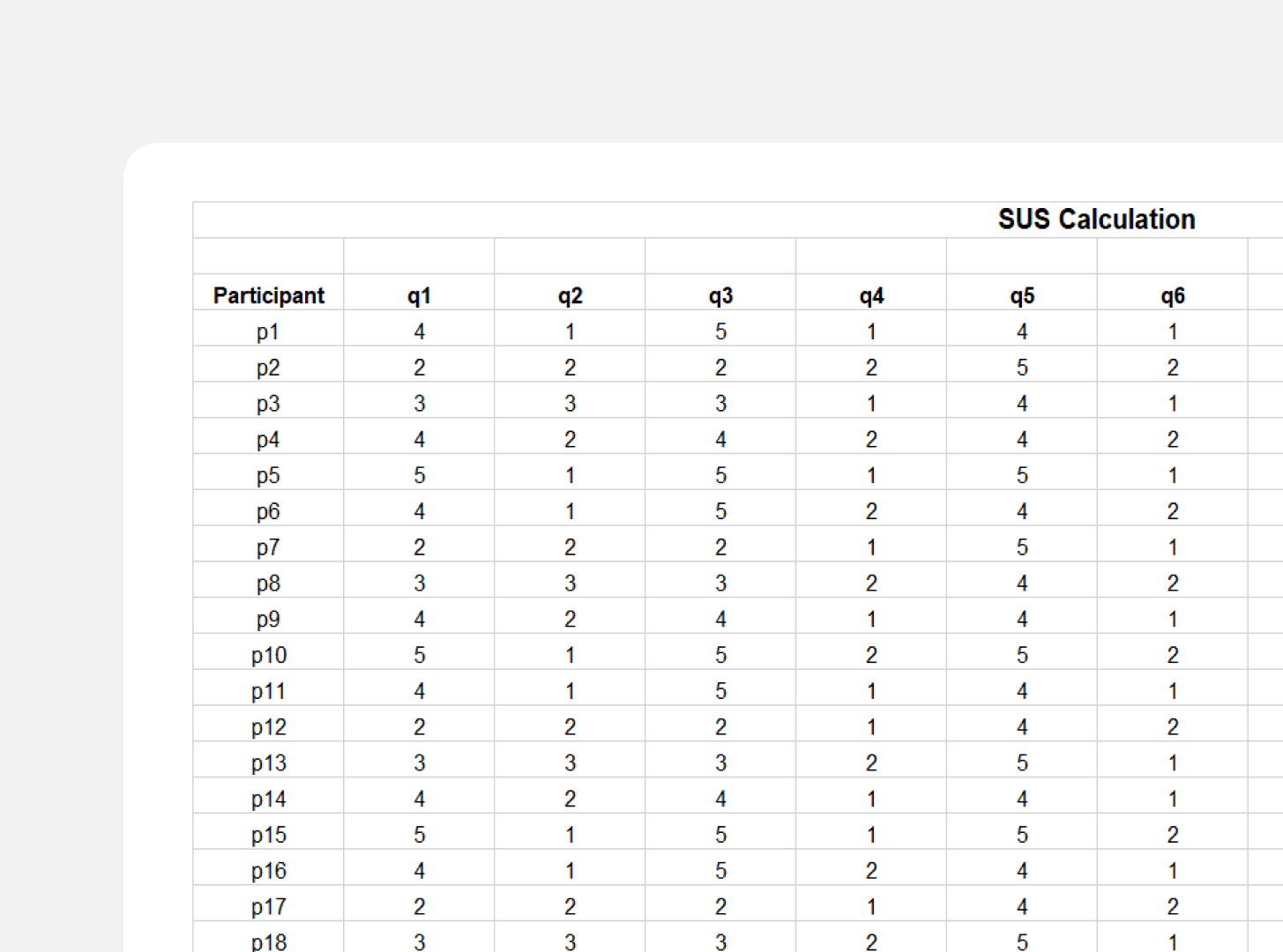
Excellant Usability Score
82.1 SUS (A) from 18 participants validates excellent usability and user delight.
Context
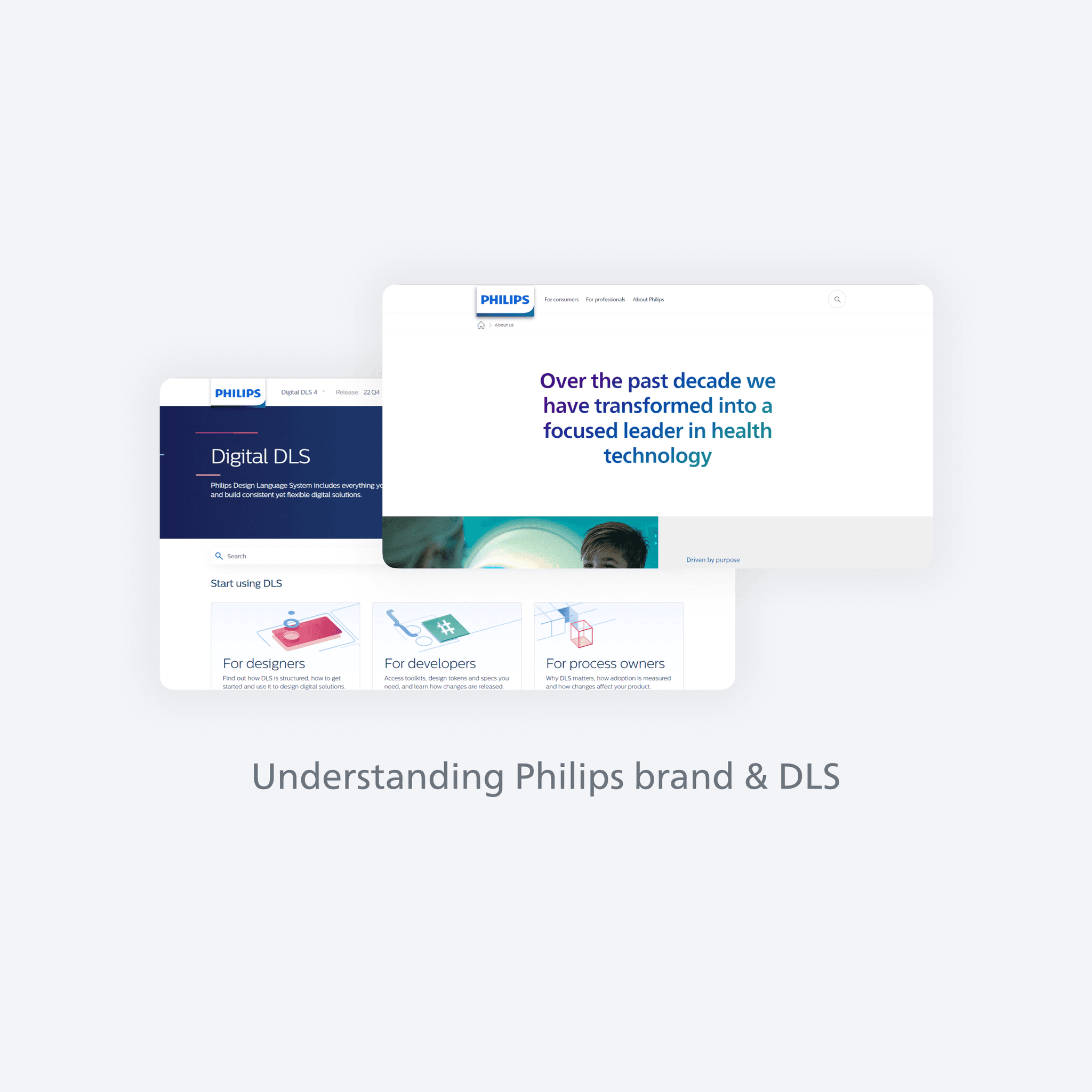
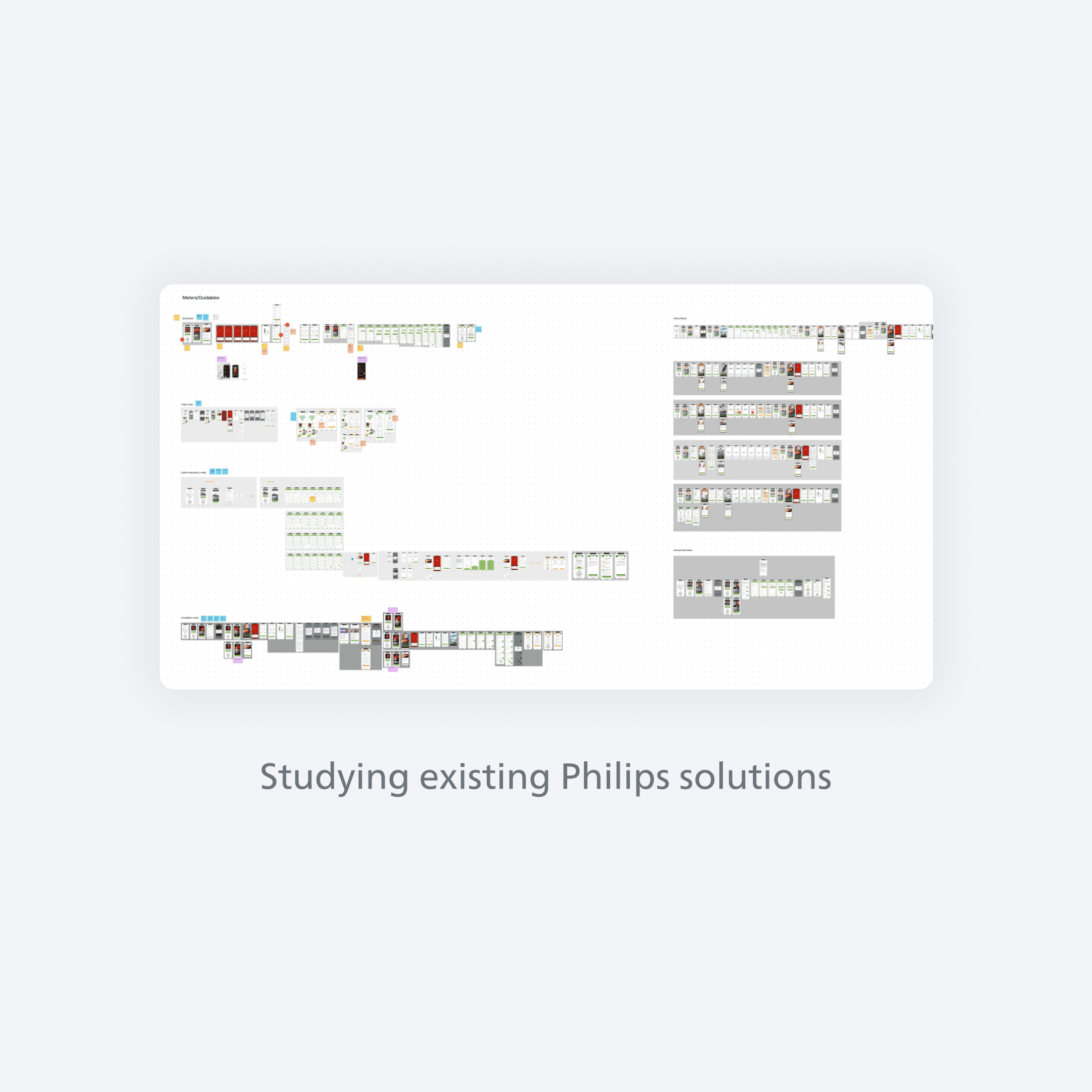
Immersed in Philips’ design culture, studied peers, synthesized insights into a clear problem statement.
What is CAD?
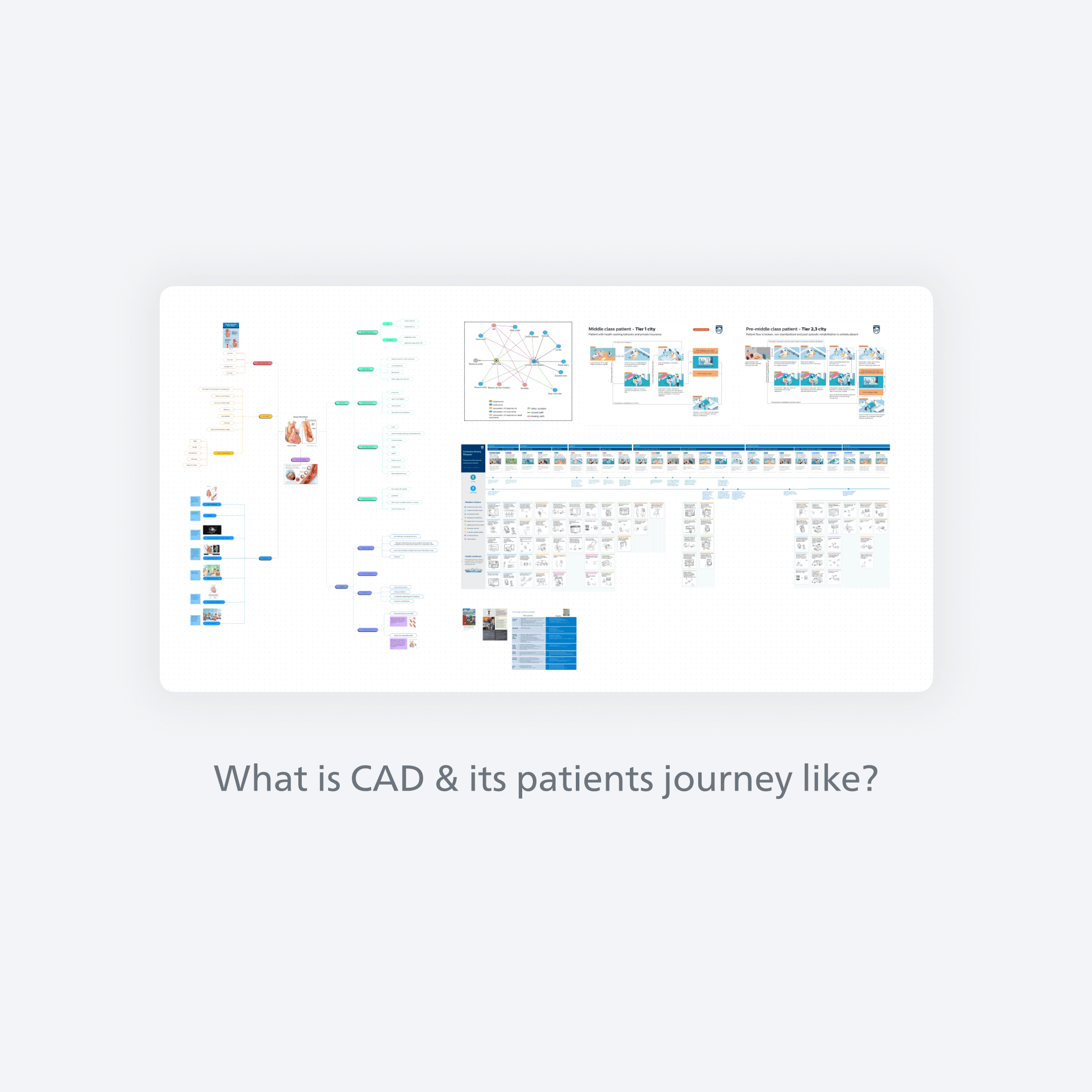
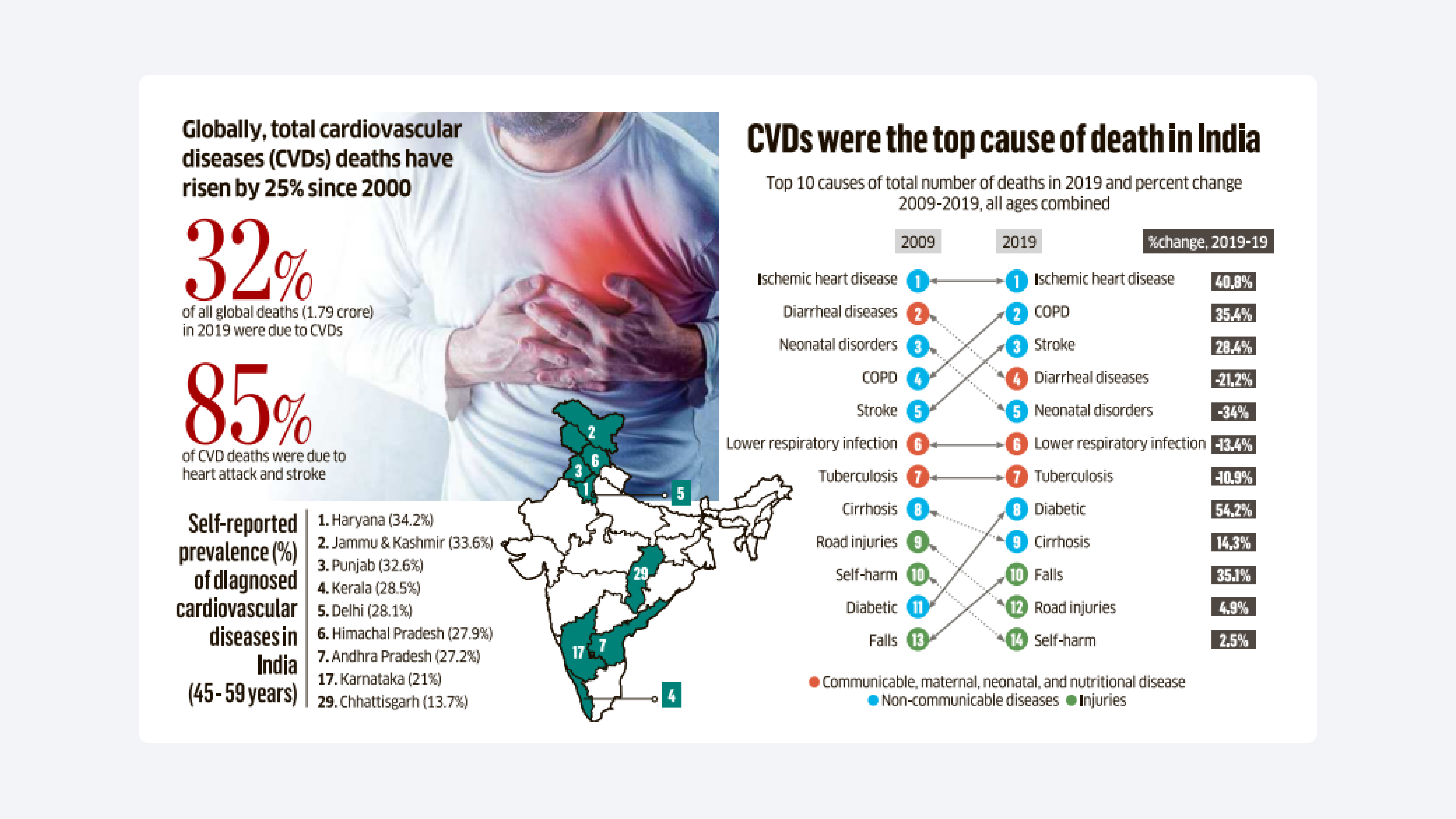
CAD is artery narrowing that reduces heart blood flow, causing angina and heart attacks.
Symptoms
Symptoms include angina, breathlessness, fatigue, palpitations, dizziness, nausea, and heart attack.
Risk factors
Risks include smoking, high BP, high LDL, diabetes, obesity, unhealthy diet, age, family history, & male sex.
Problem Statement
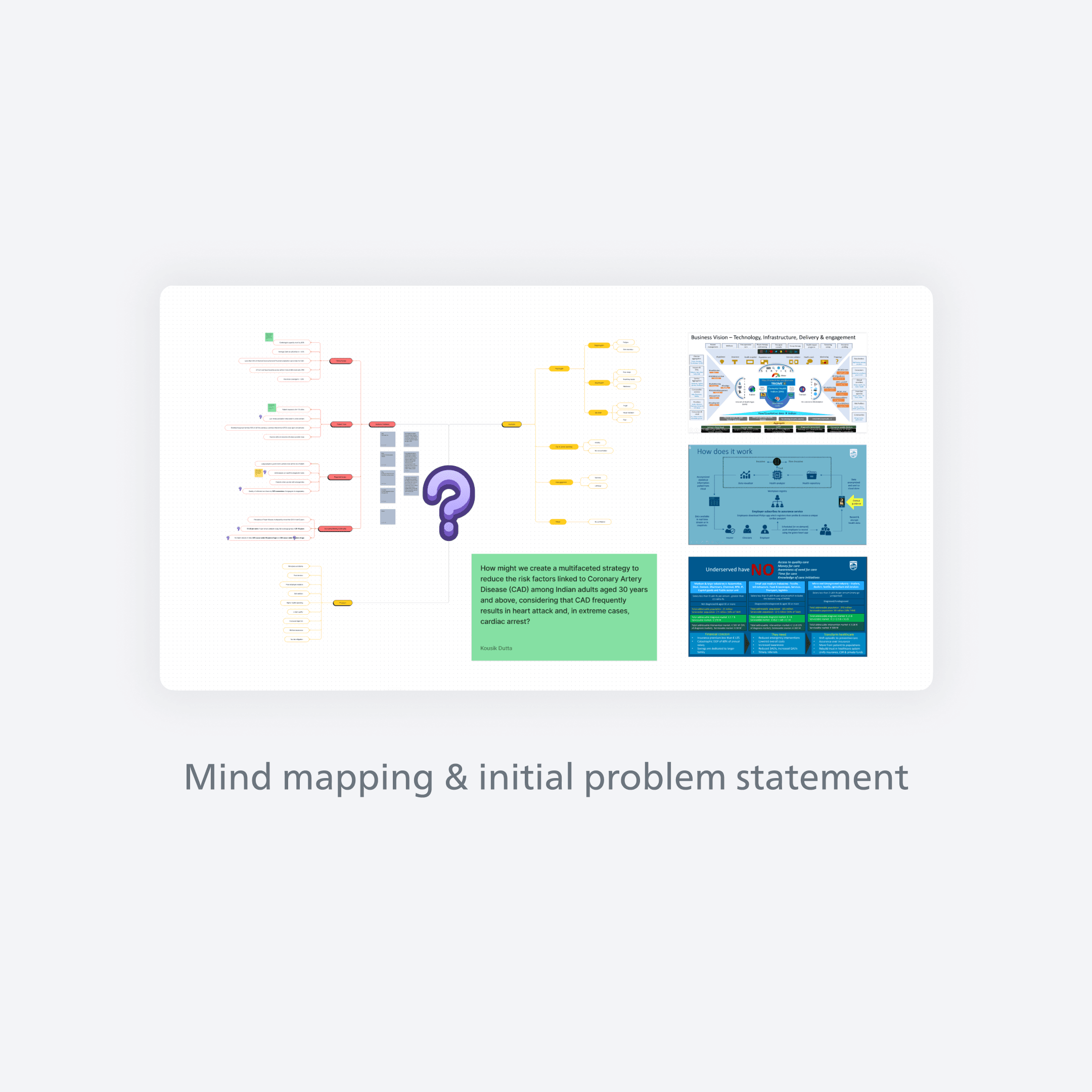
How might we create a comprehensive solution to reduce the risk factors linked to CAD among Indian adults, considering its potential for heart attacks and cardiac arrests?
Research
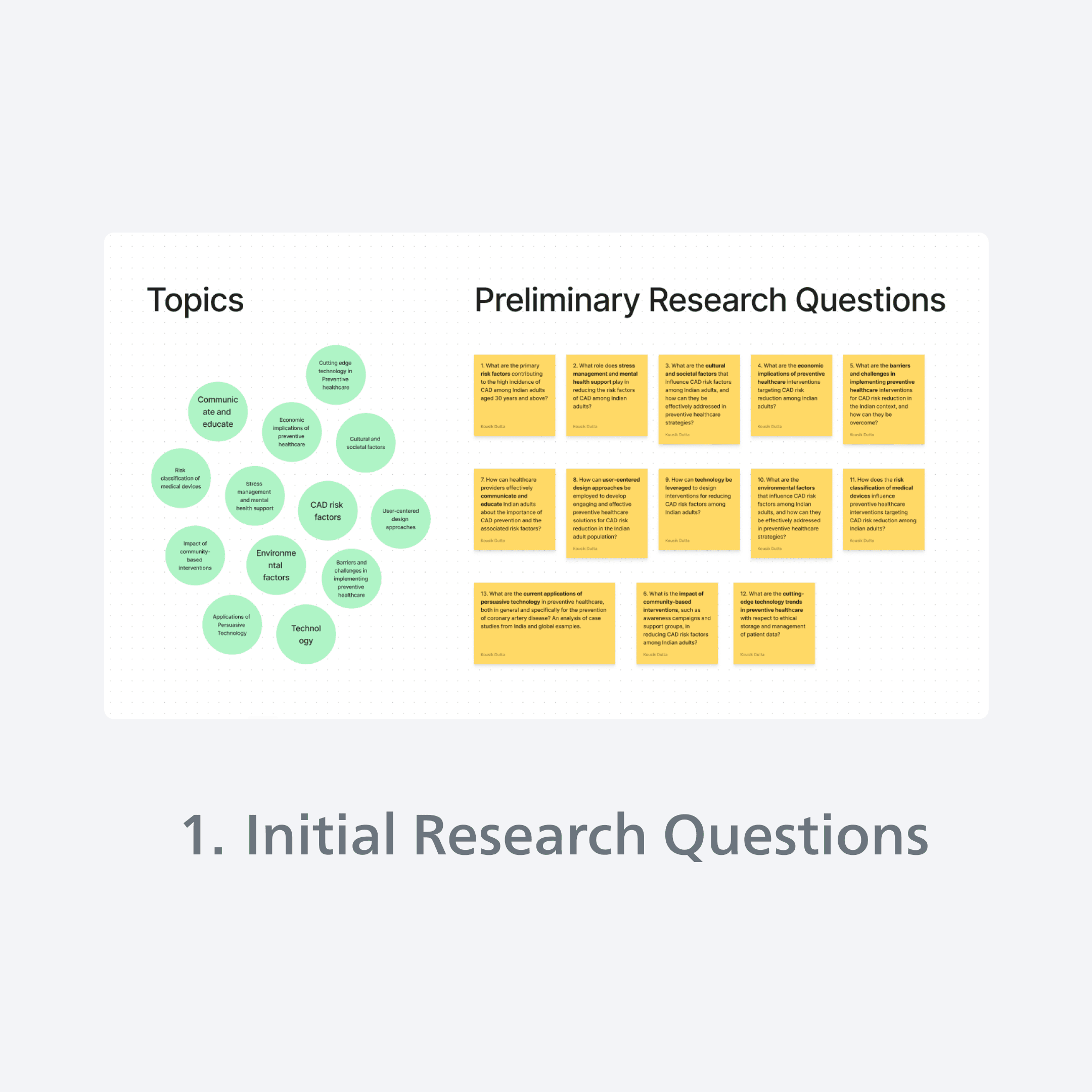
Defined research questions, reviewed literature, analyzed competitors, identified gaps, & crafted user interview questions.
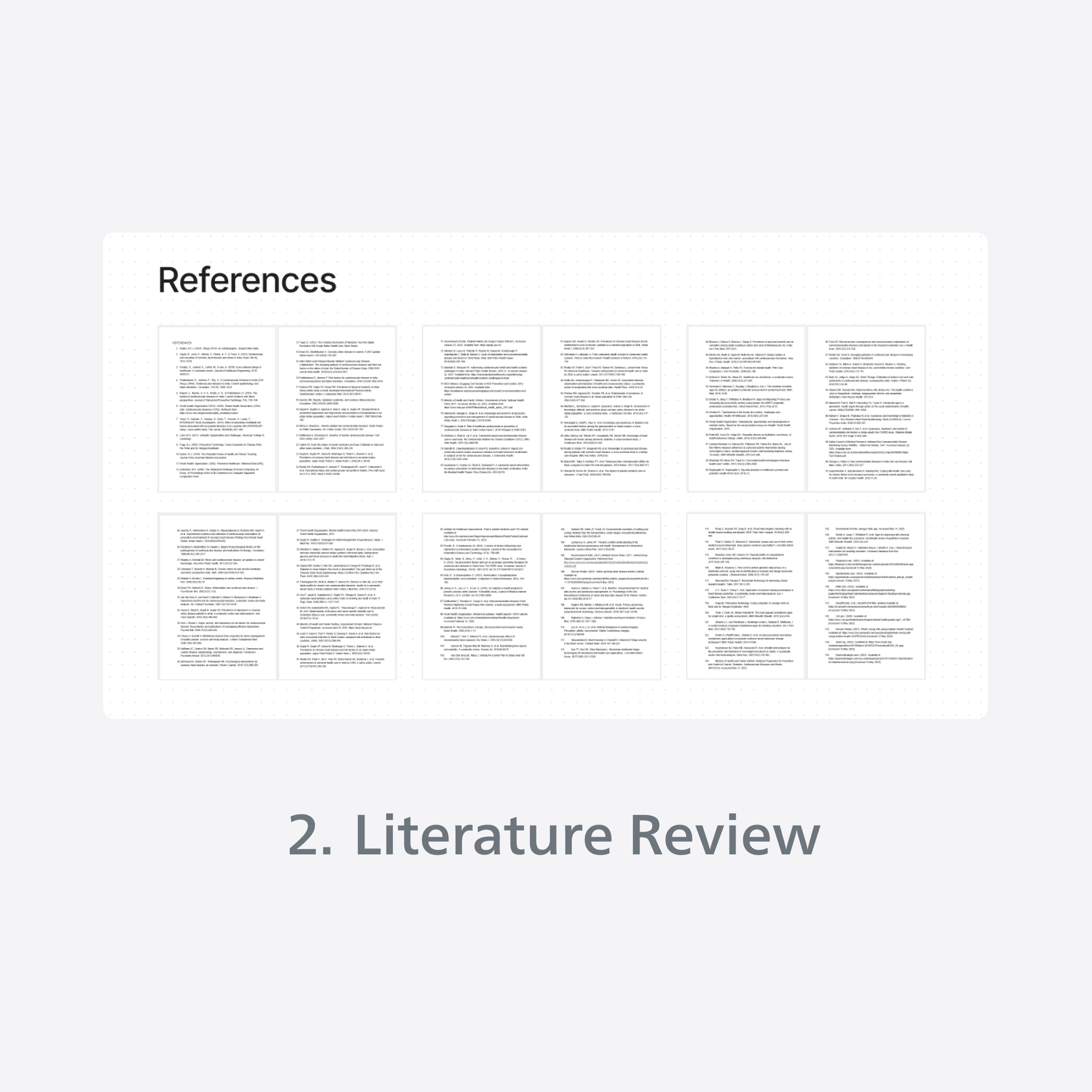

Literature Review: Insights
Actionable insights from reviewing 141 literatures
CAD Risk Factors
A sedentary lifestyle, poor diet, metabolic conditions, and inequities elevate CAD risk in Indians 30+.
Stress Management
Managing chronic stress and mental health reduces behaviors and physiologic drivers linked to CAD.
Culture & Society
Promote healthy diets, address socioeconomic gaps, and lower cultural barriers to regular activity.
Tech Interventions
Digital self‑monitoring and nudges can support behavior change and targeted prevention at scale.
Environmental Factors
Pollution, limited green spaces, and urban design influence cardiovascular risk profiles.
Device Risk Classification
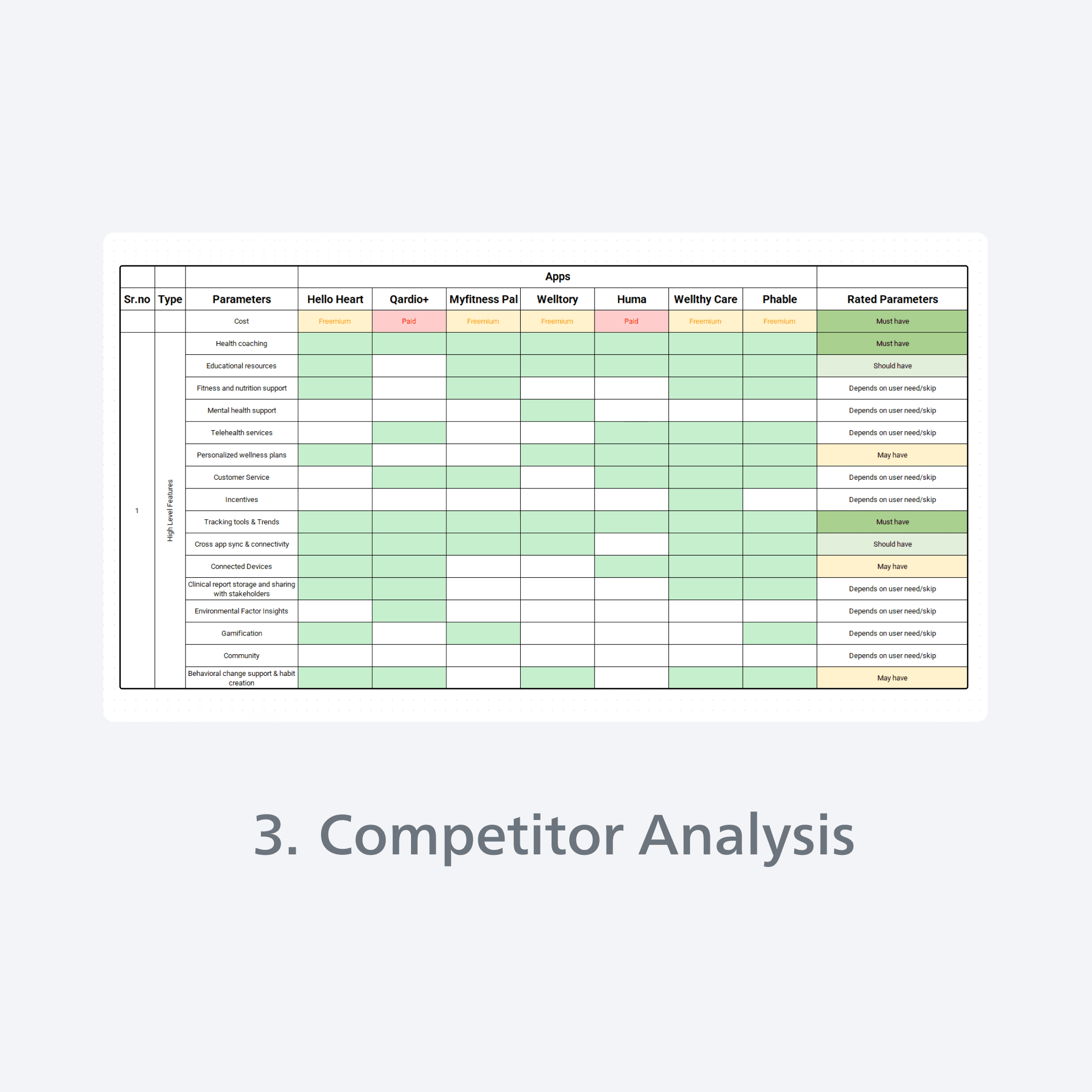
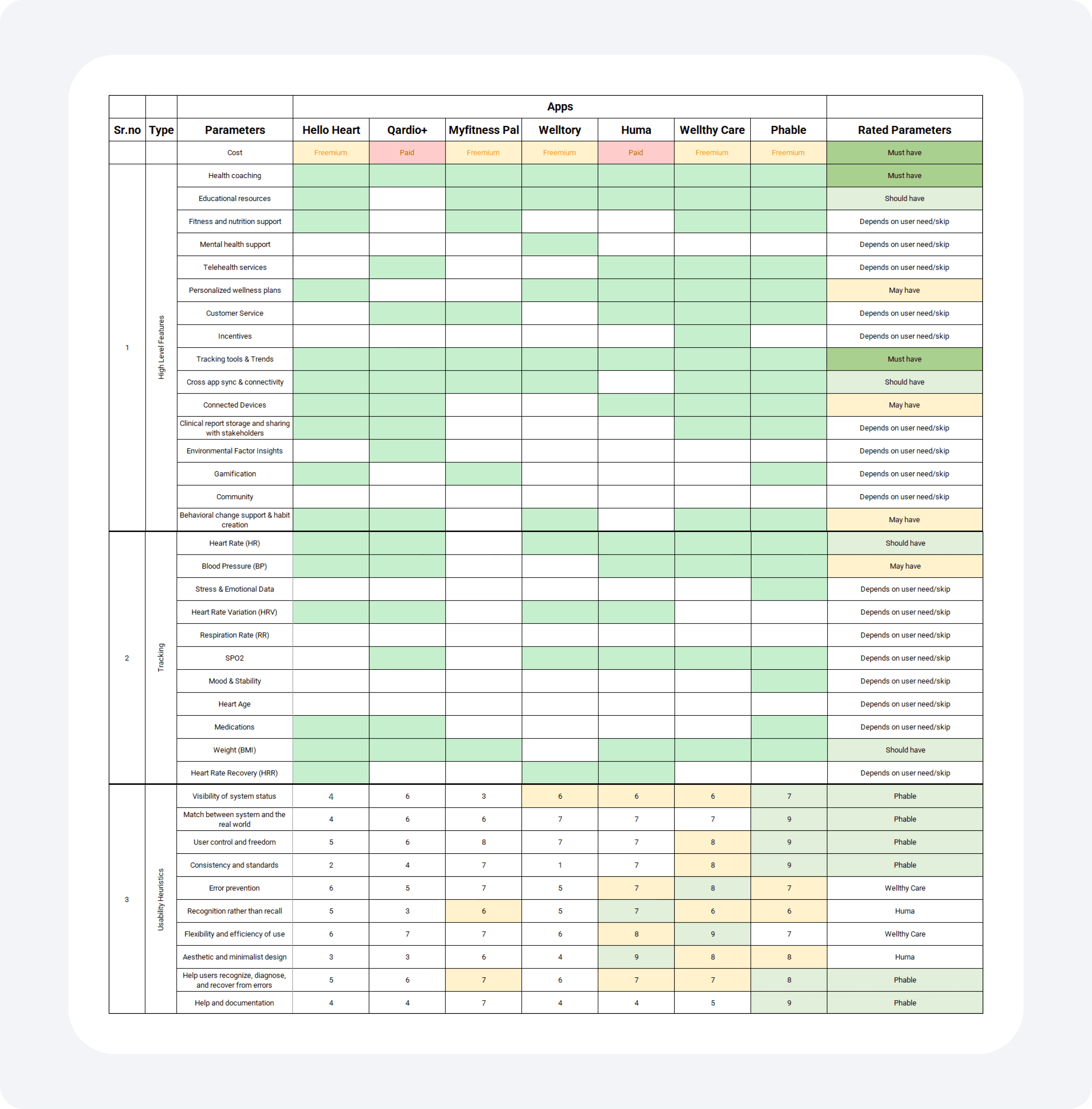
Competitor Research
Comprehensive competitor analysis and benchmarking
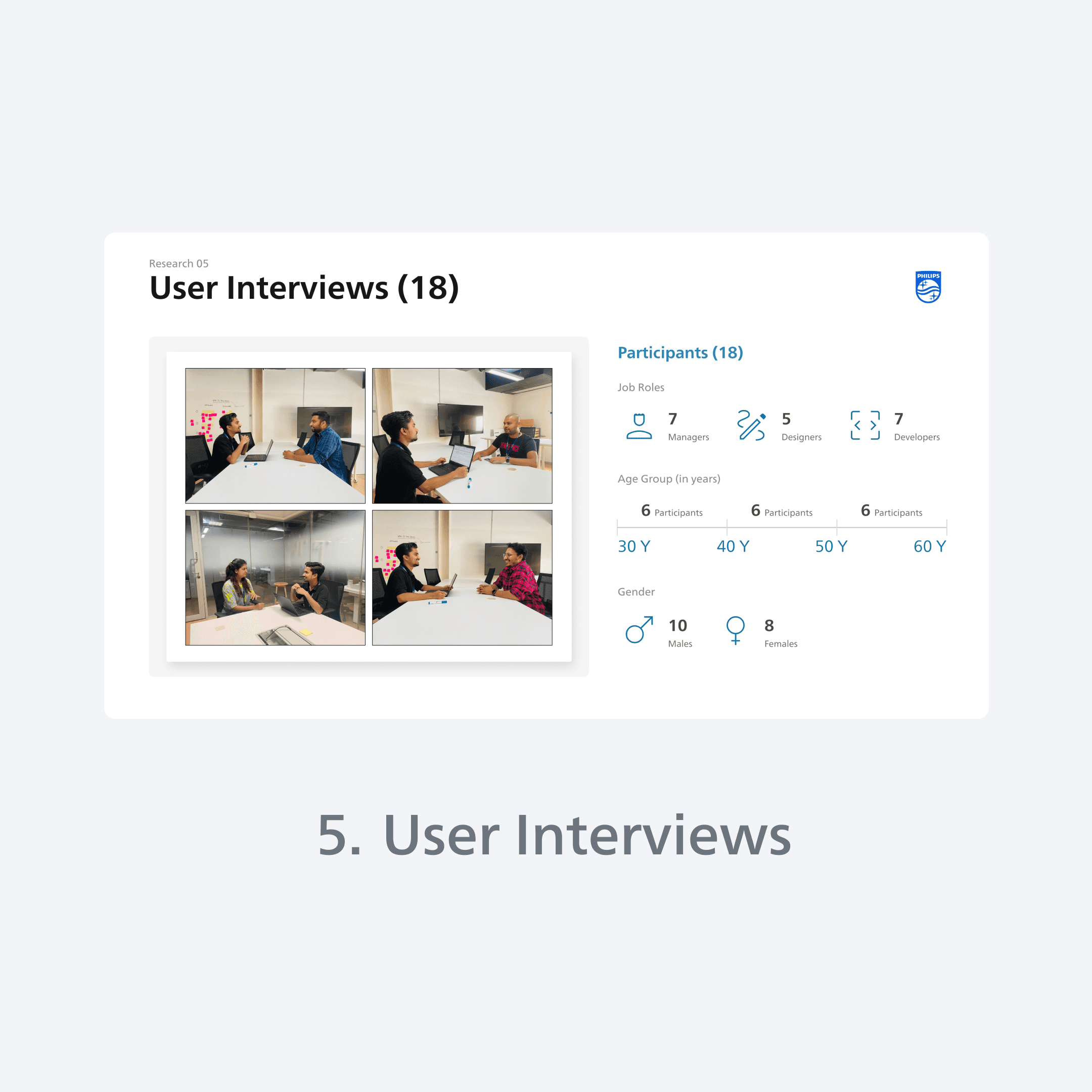
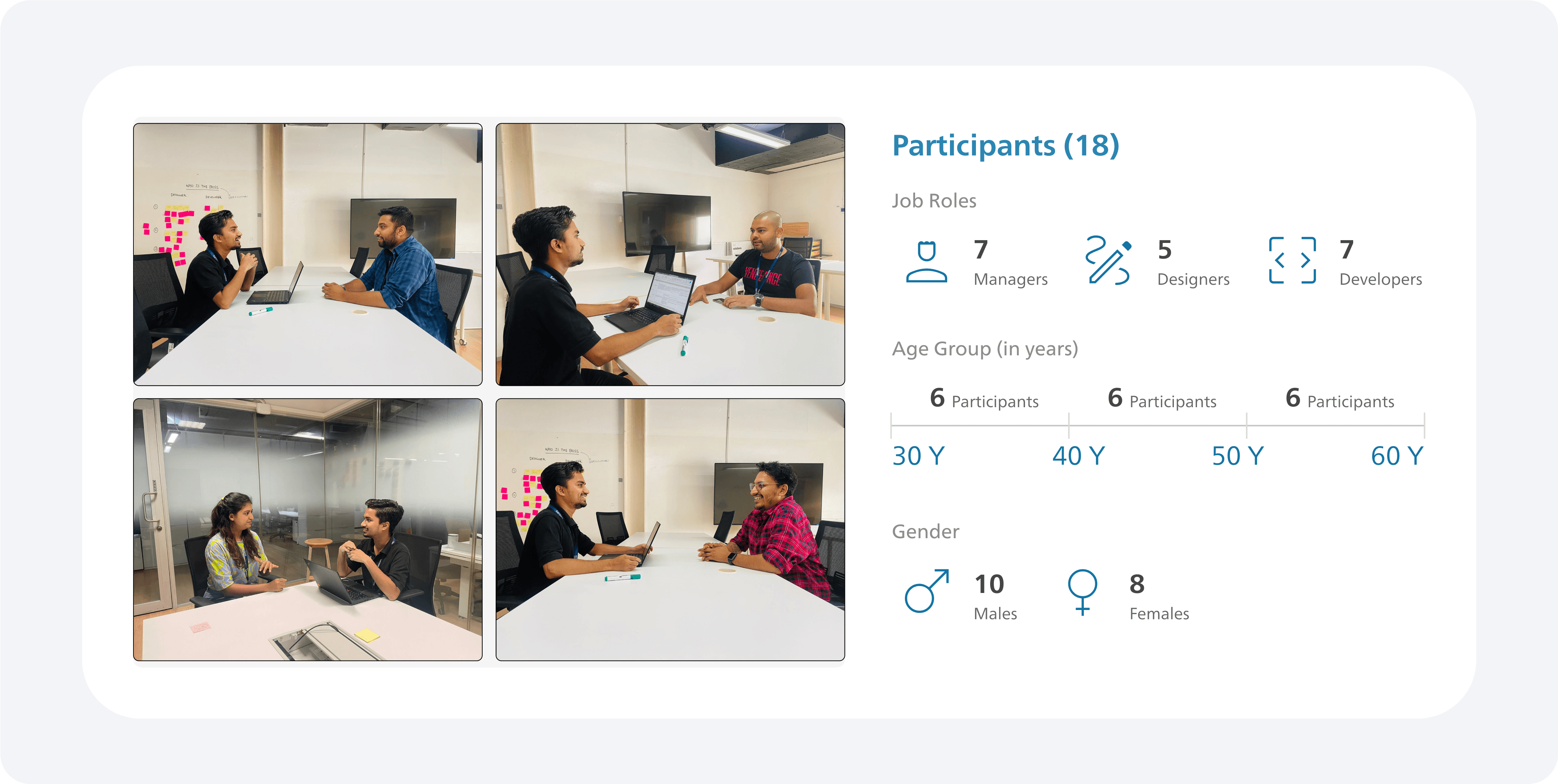
User Interviews
Systematic approach towards conducting 18 interviews
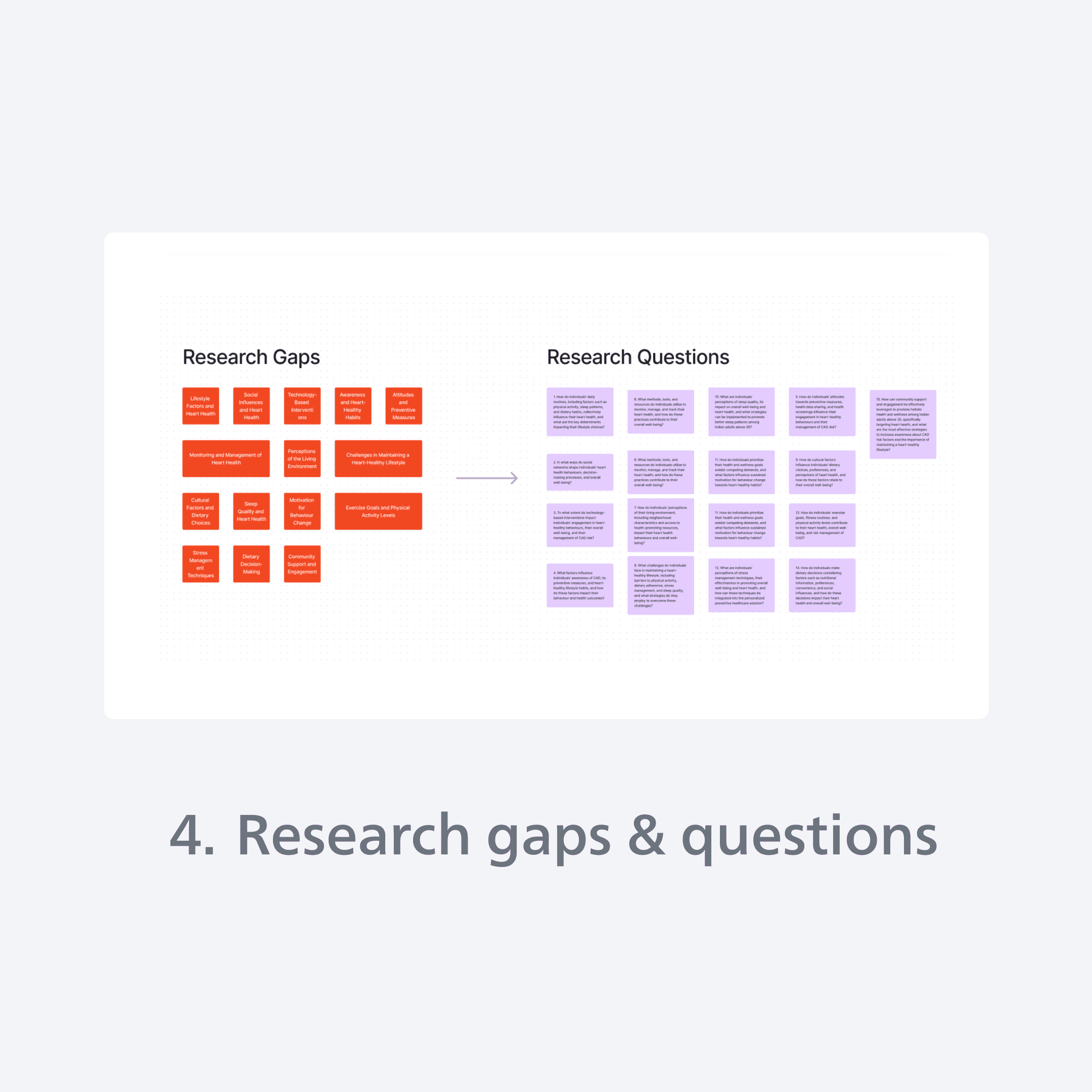
Gaps to questions
Literature and competitor reviews answered early questions and exposed gaps reframed as new questions.
Objectives
Those questions defined interview objectives, target participants, and a focused discussion guide.
Questionnaire
Objectives shaped clear, phased questions to ease participants and surface honest insights.
Analysis
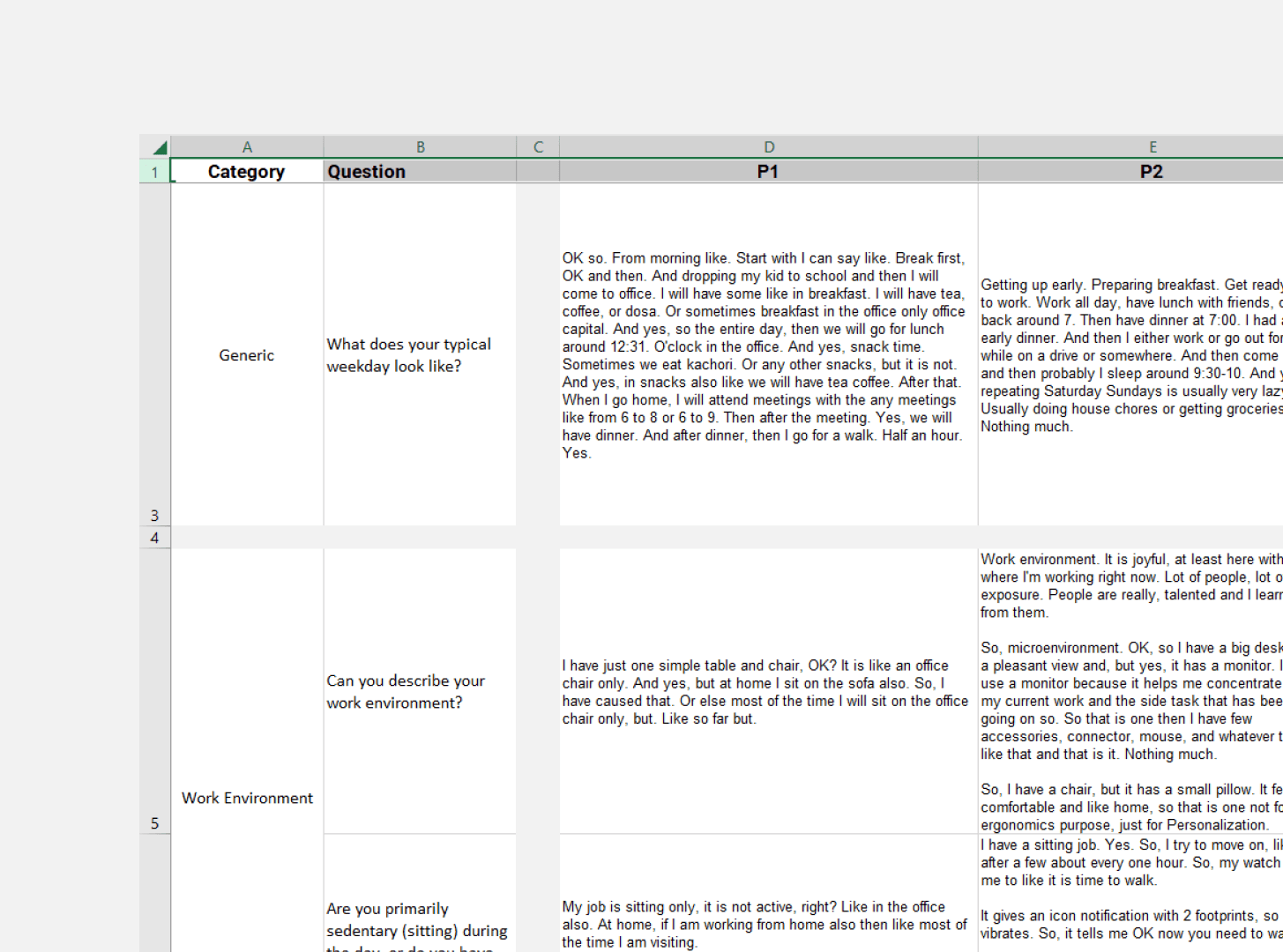
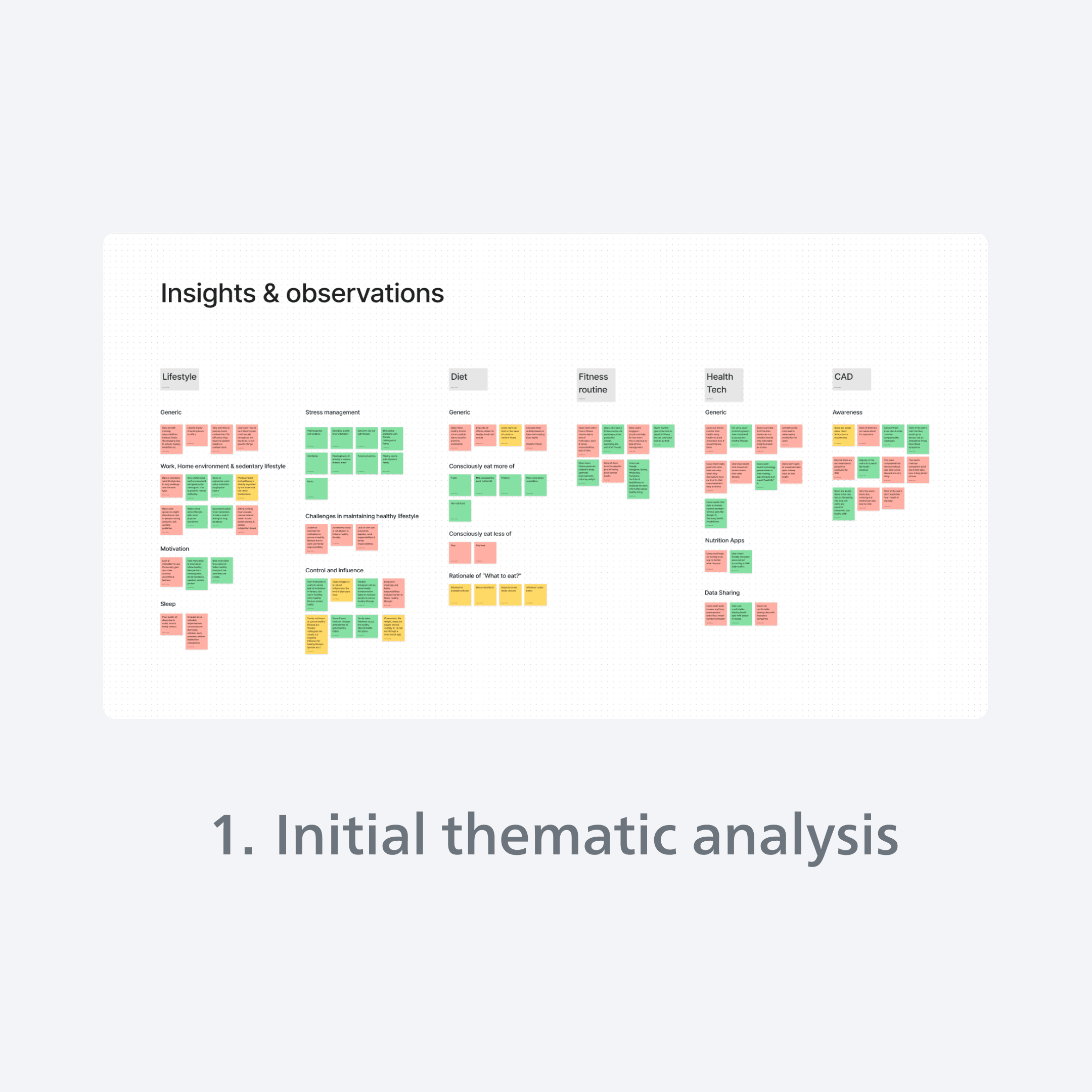
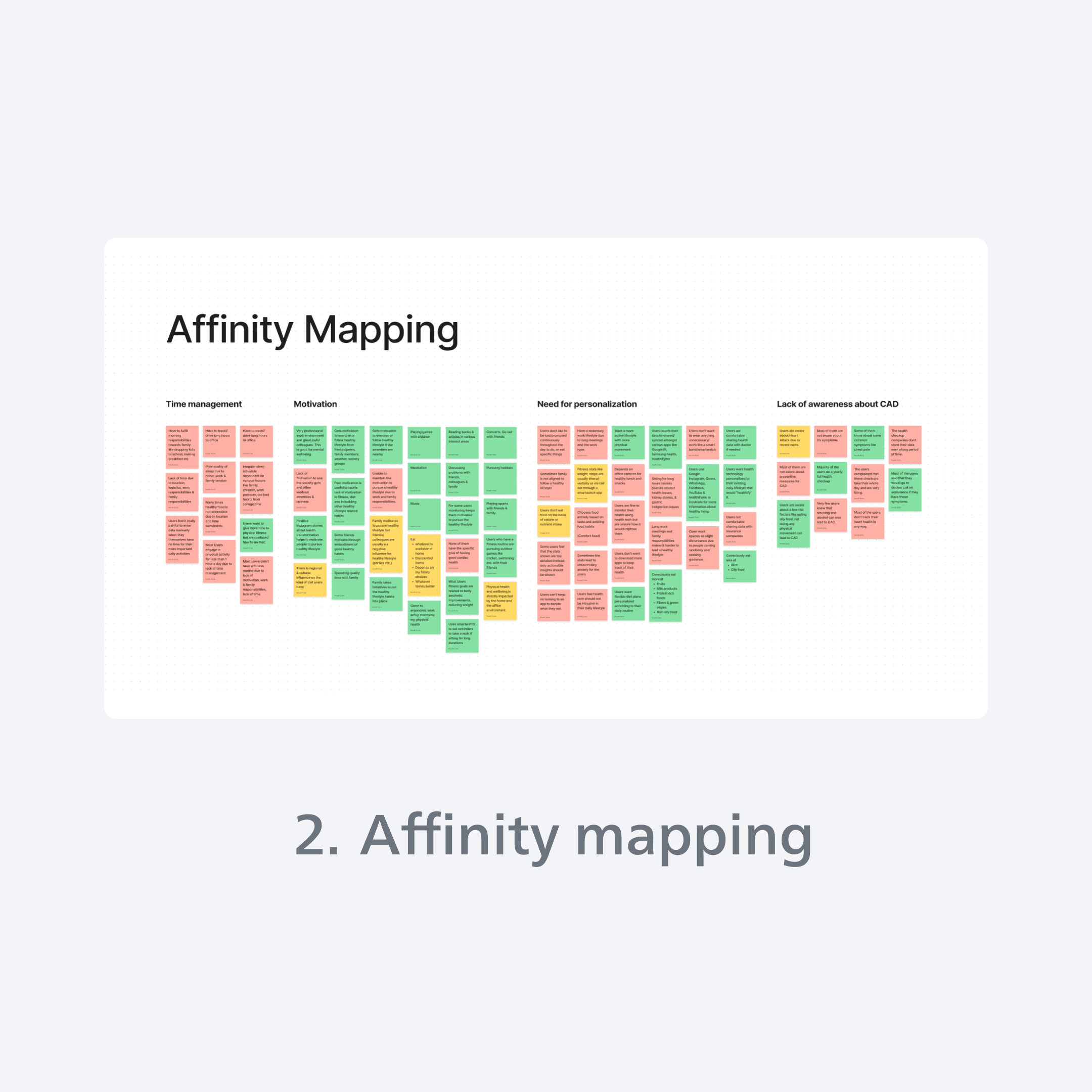
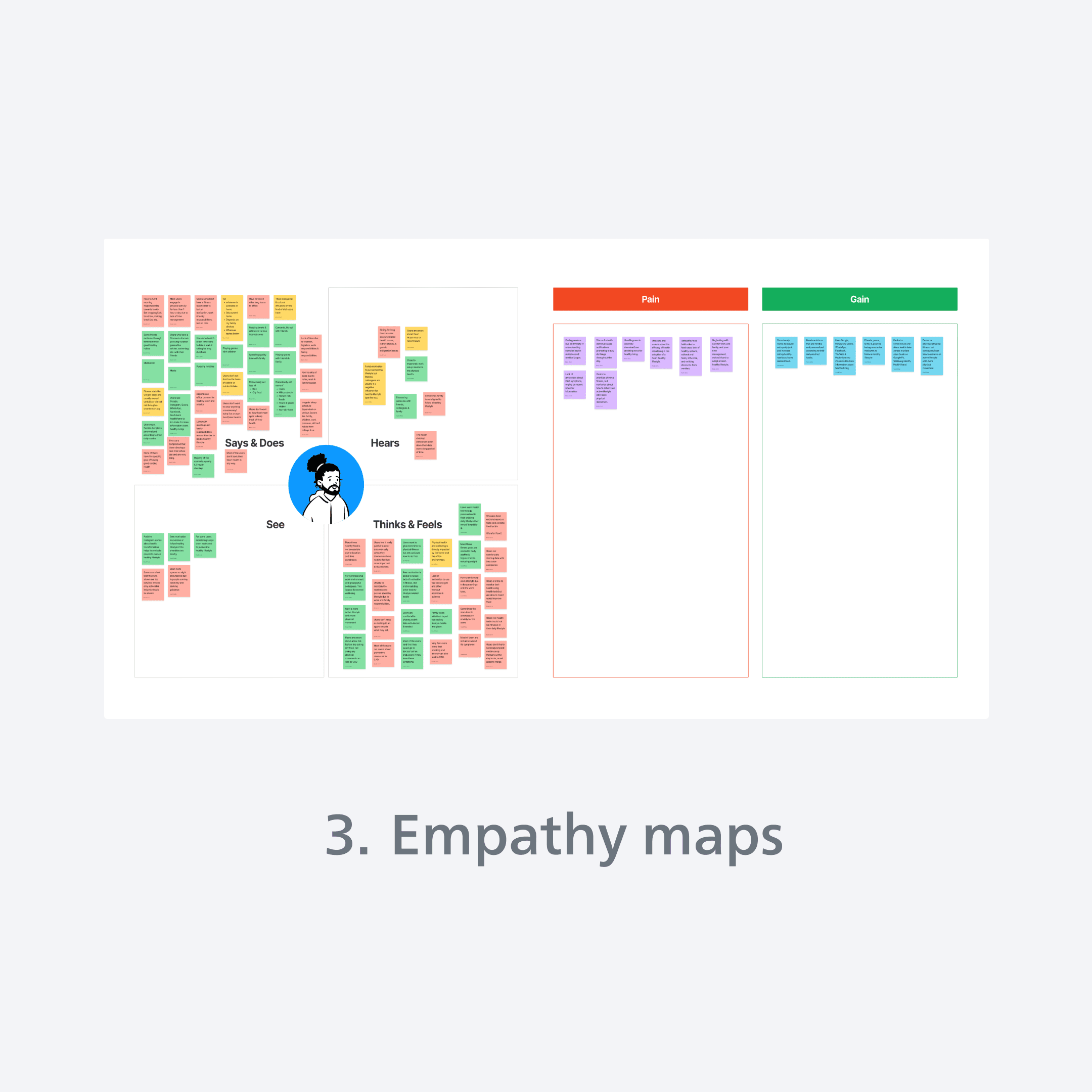
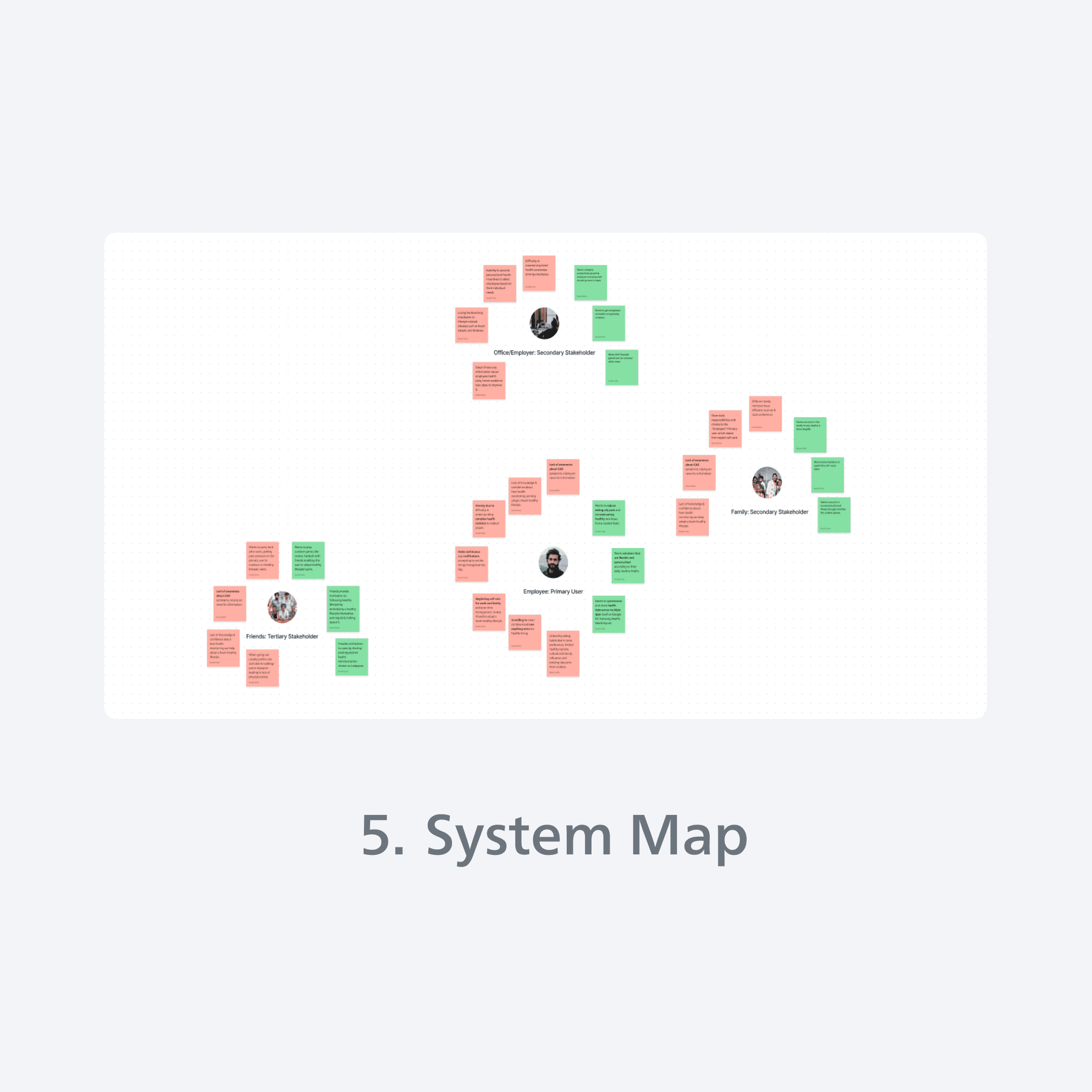
Transcribed interviews in Excel, built an inductive codebook, distilled four themes, and produced user stories, stakeholder maps, and a persona revealing CAD prevention opportunities.
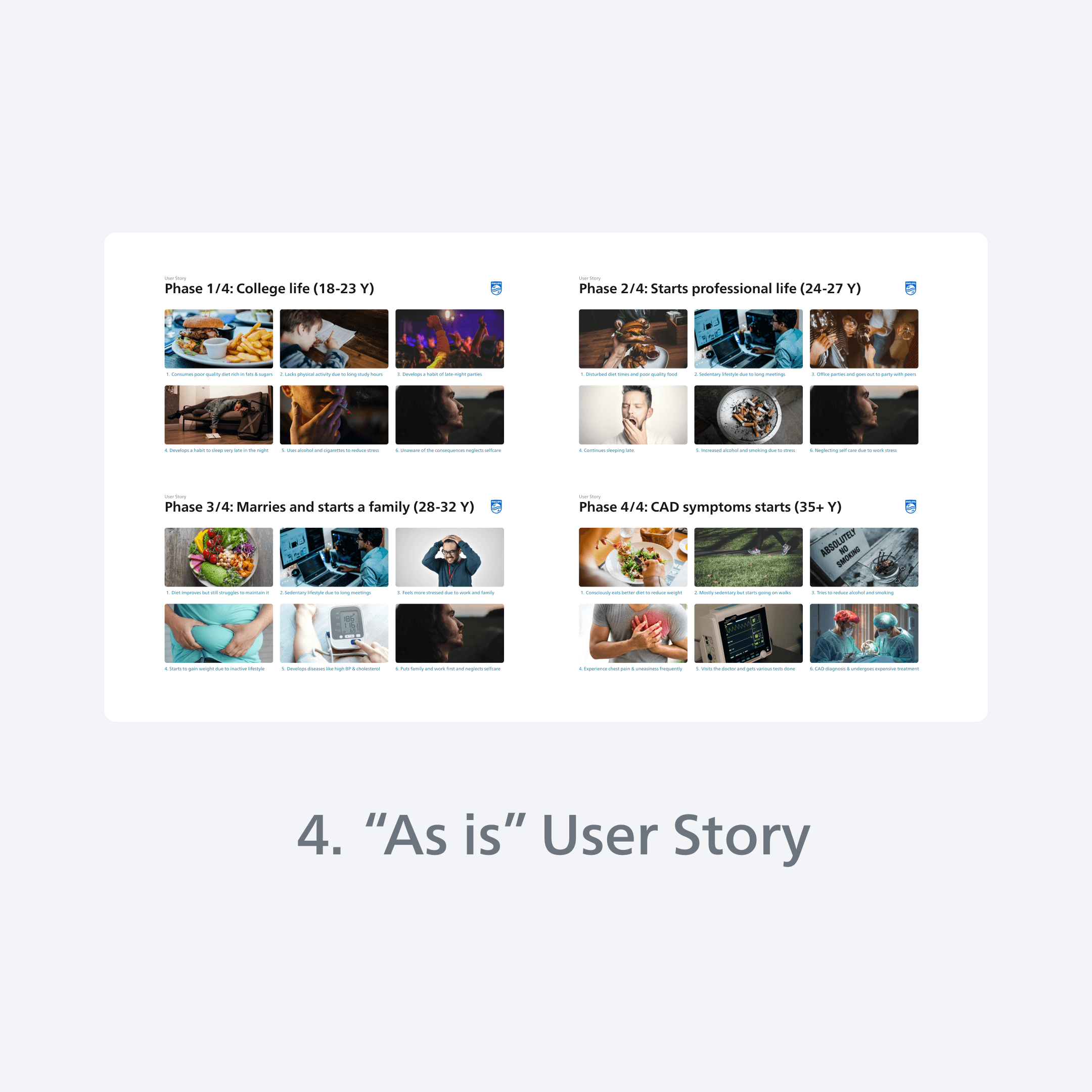
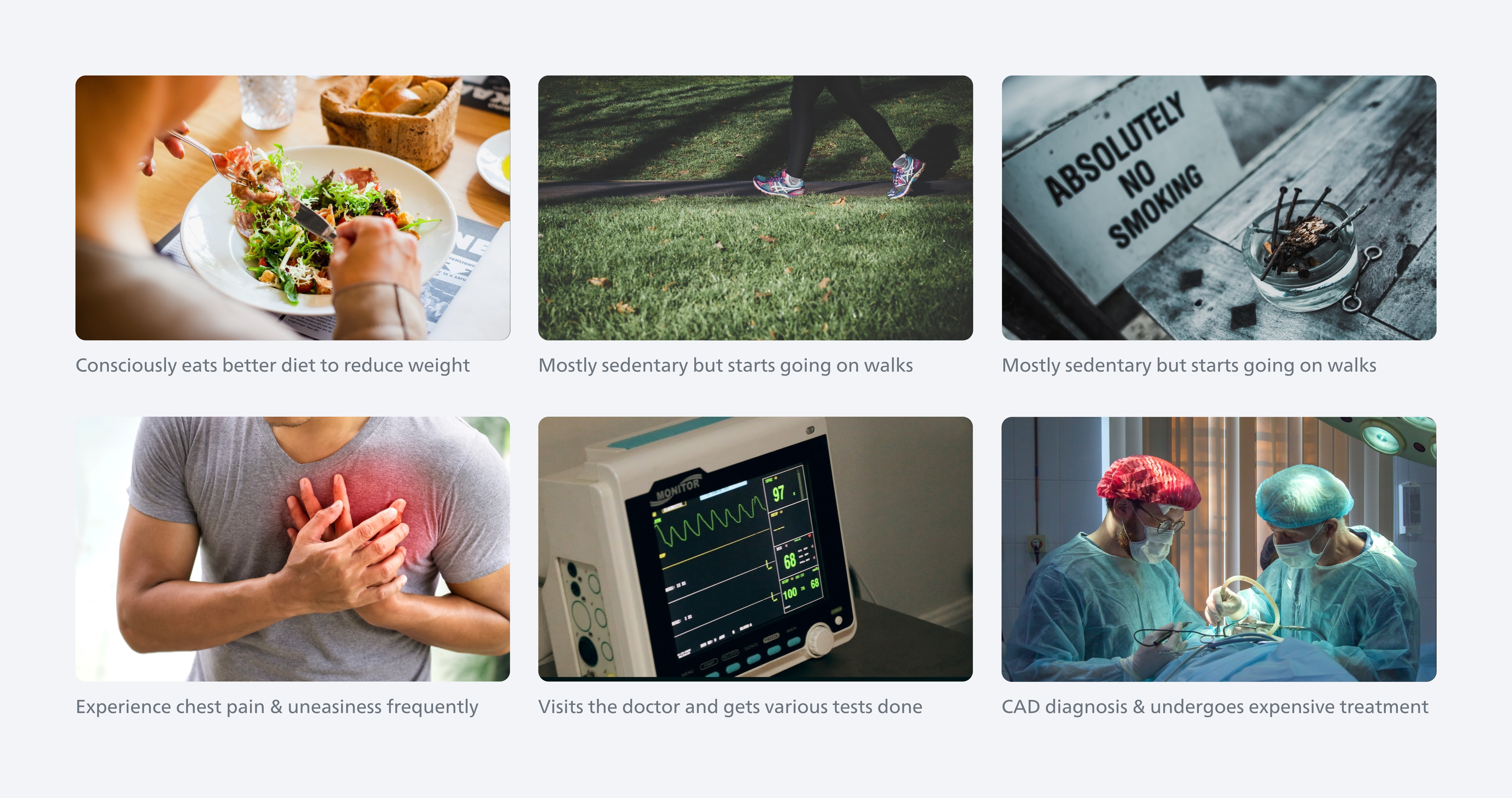
“As is” User Story
Lifecycle of a typical CAD patient (pre-diagnosis)
Phase 1/4: College Life (18-23Y)
Poor diet, long sitting, late nights, smoking or alcohol, and ignored self care dominate.

Phase 2/4: Starts professional life (24-27 Y)
Work disrupts meals, extends sitting, adds parties, increases alcohol or smoking, and neglects self care.

Phase 3/4: Marries and starts a family (28-32 Y)
Diet improves slightly, but sitting persists, stress rises, weight increases, BP and cholesterol emerge, self care slips.

Phase 4/4: CAD symptoms starts (35+ Y)
Better diet and walks start, less alcohol or smoking, chest pain leads to tests and treatment.
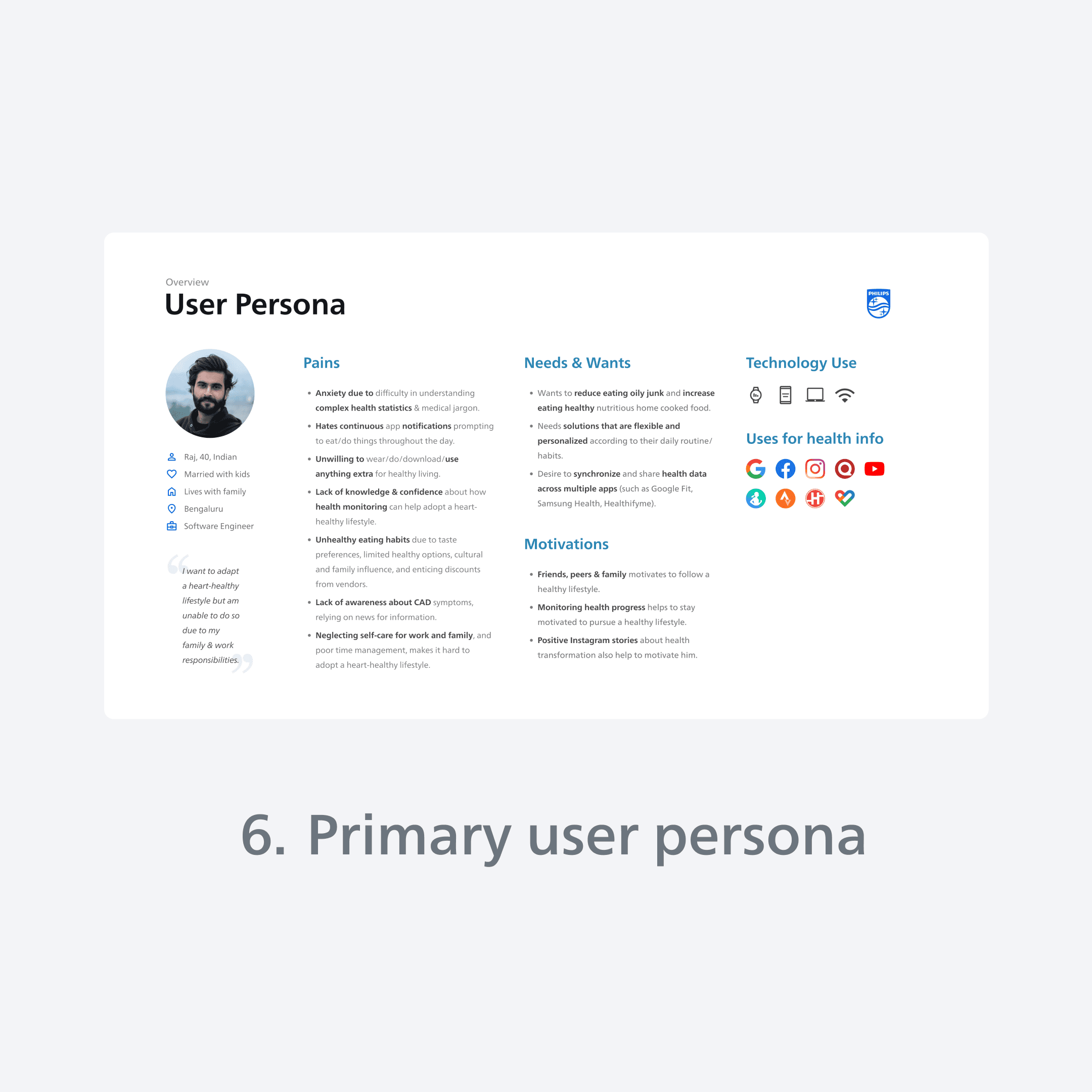
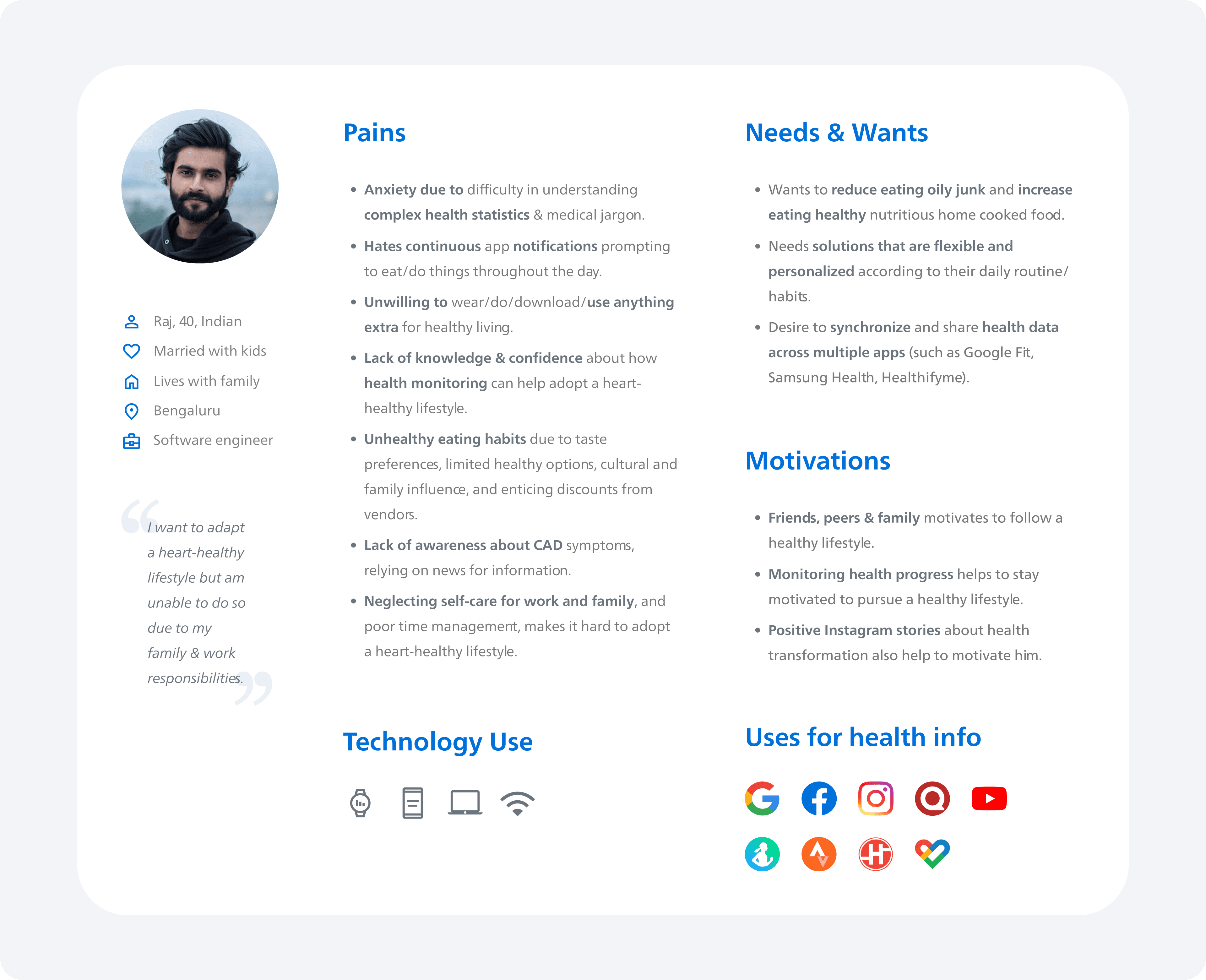
Primary User Persona
Meet Raj a typical software engineer
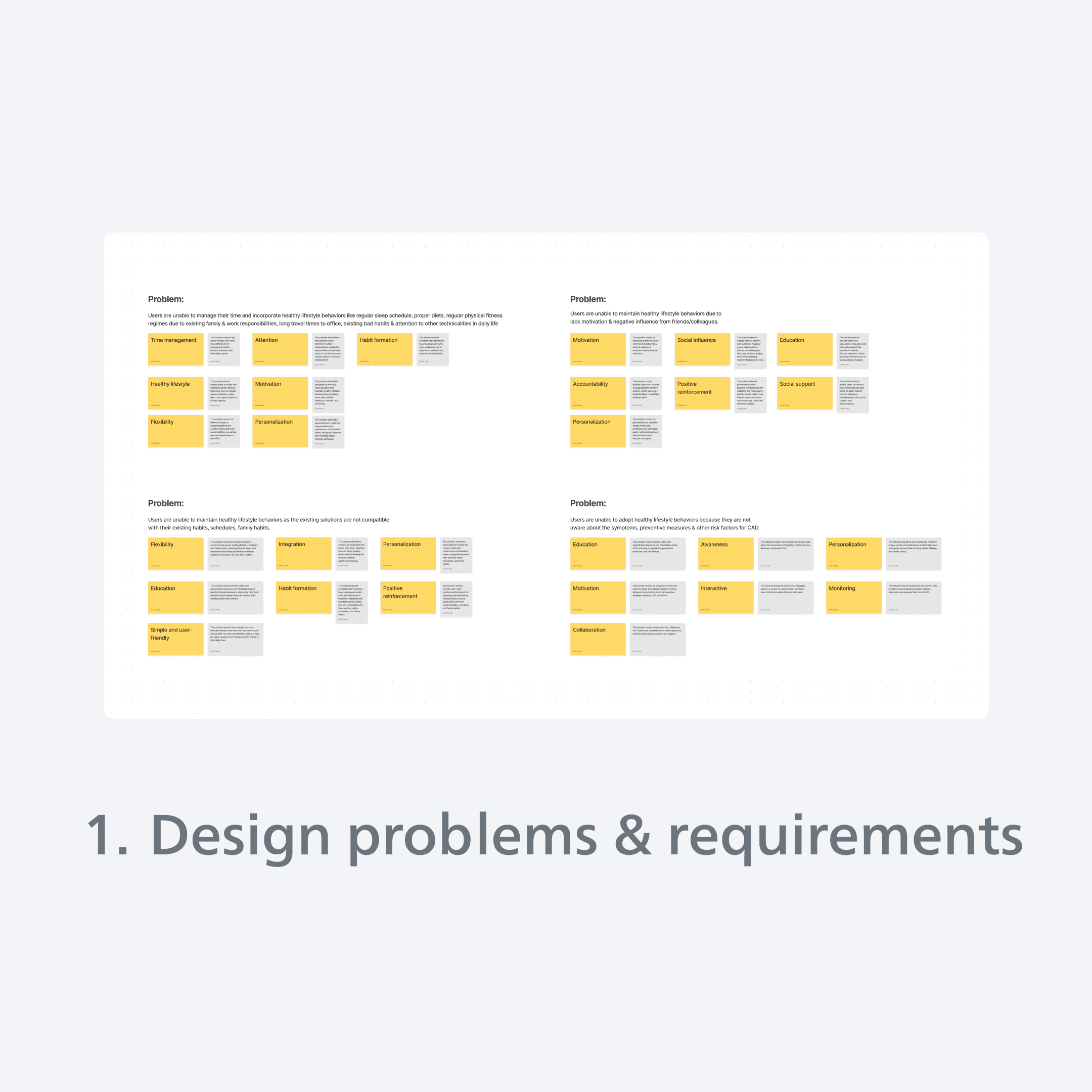
Define
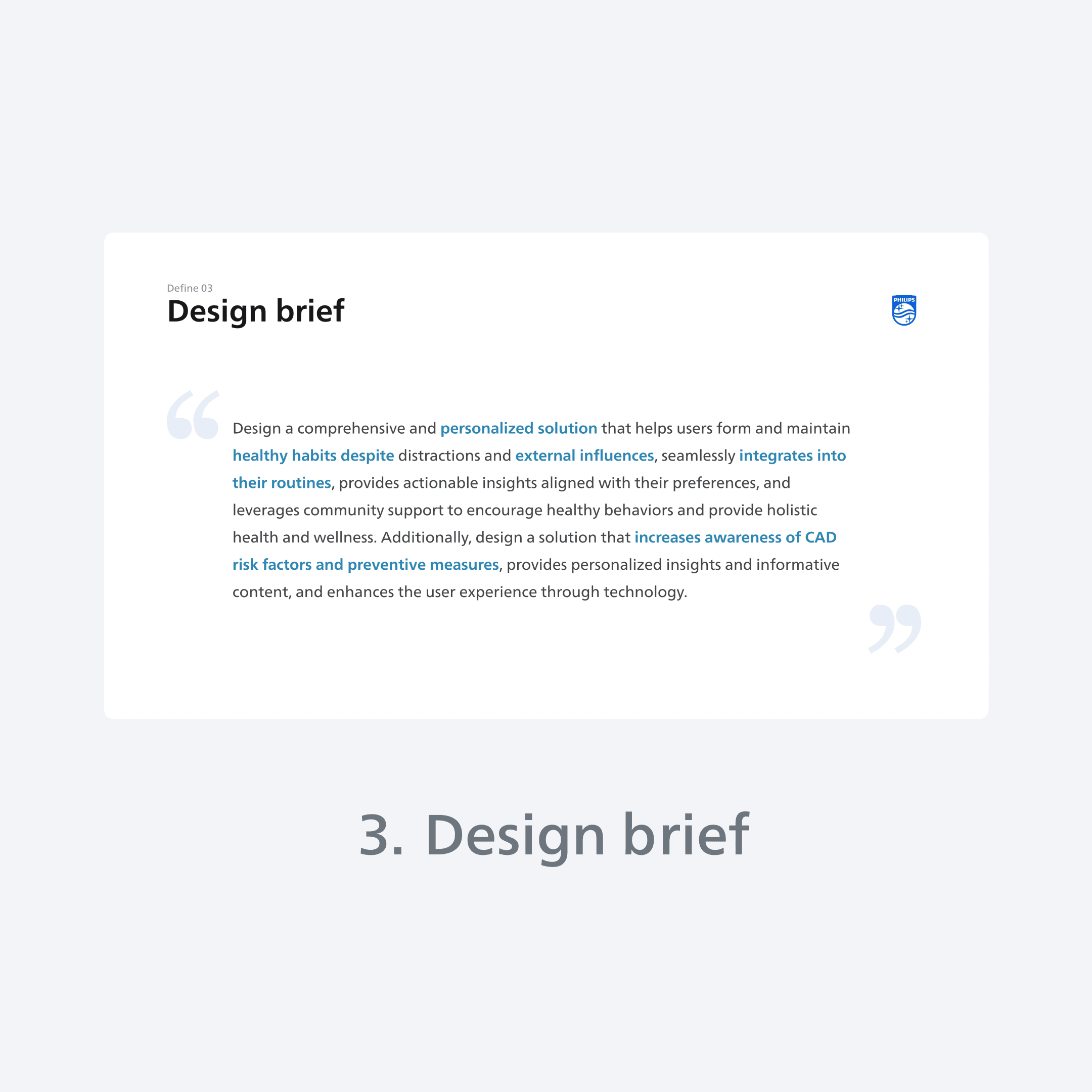
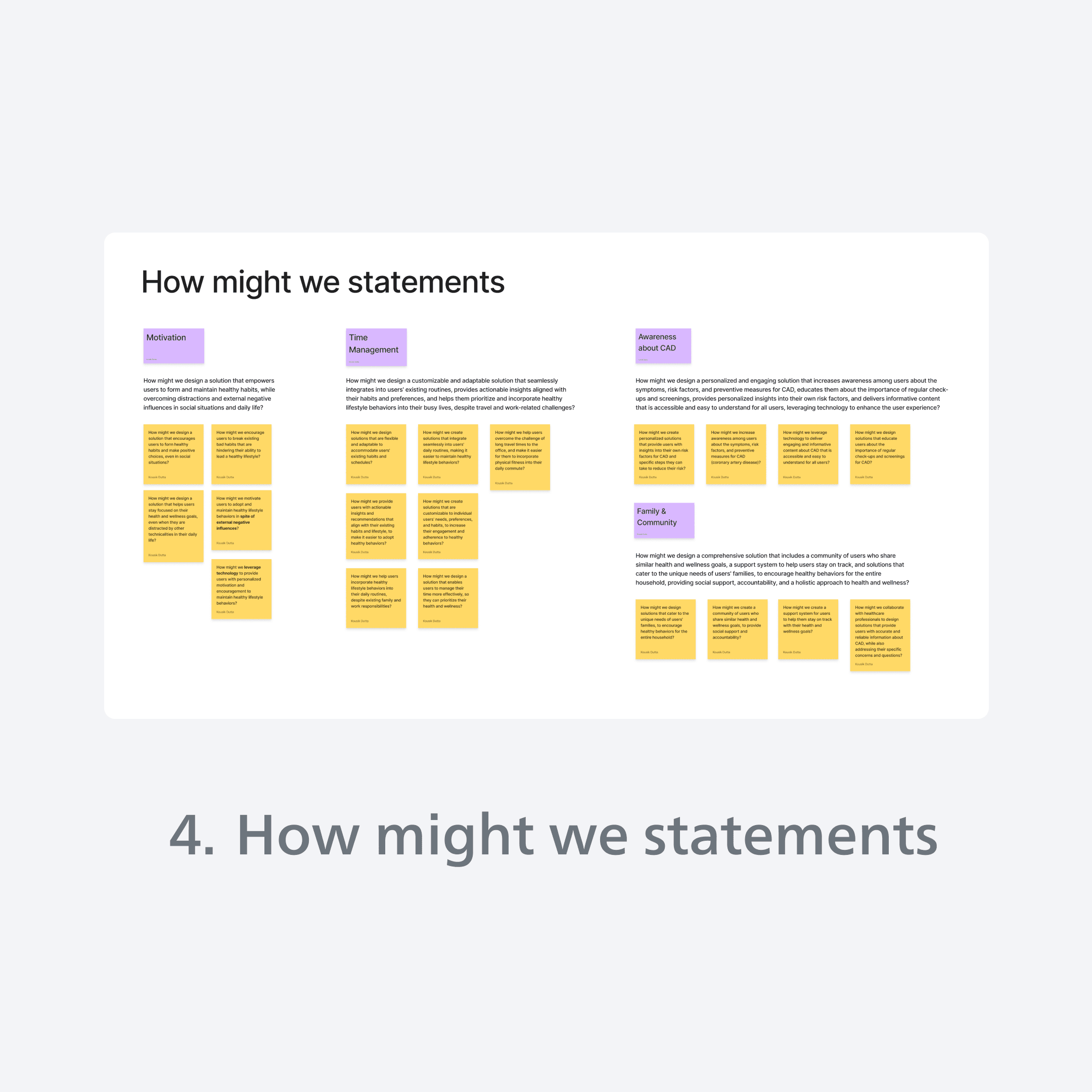
Analyzed research, defined four problems, set guiding principles, and delivered a focused design brief.
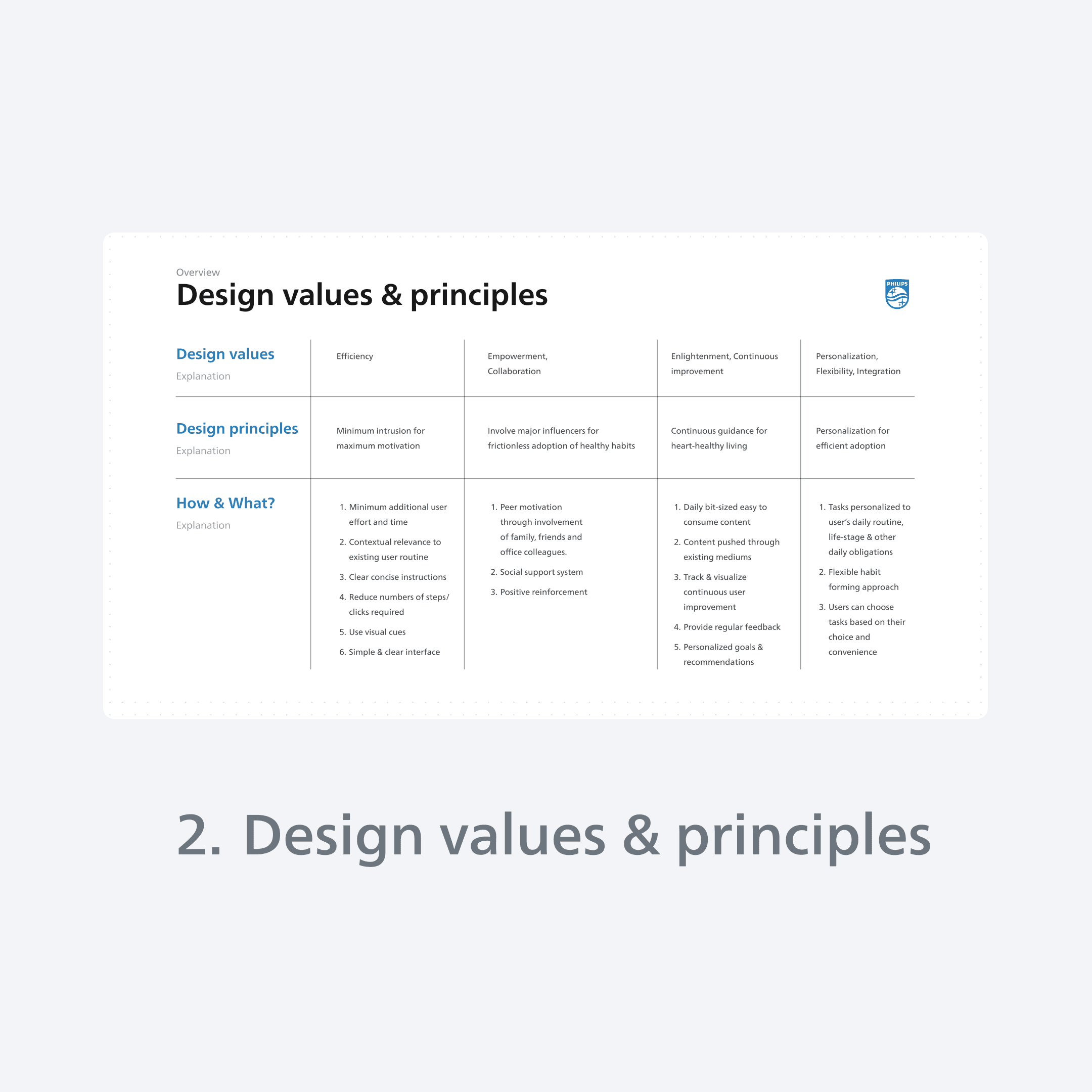
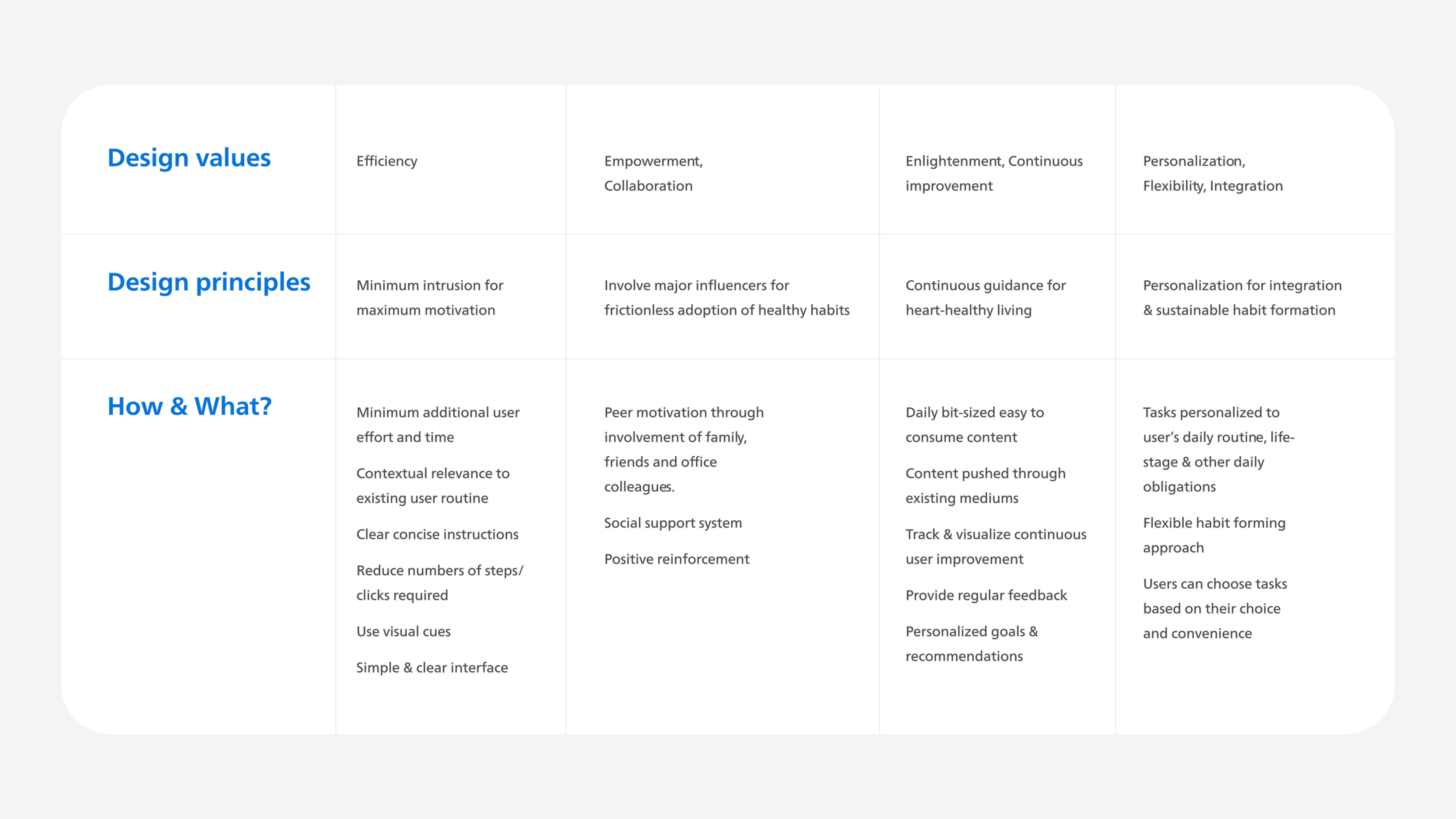
Design Principles
The guiding light for design explorations
Ideation
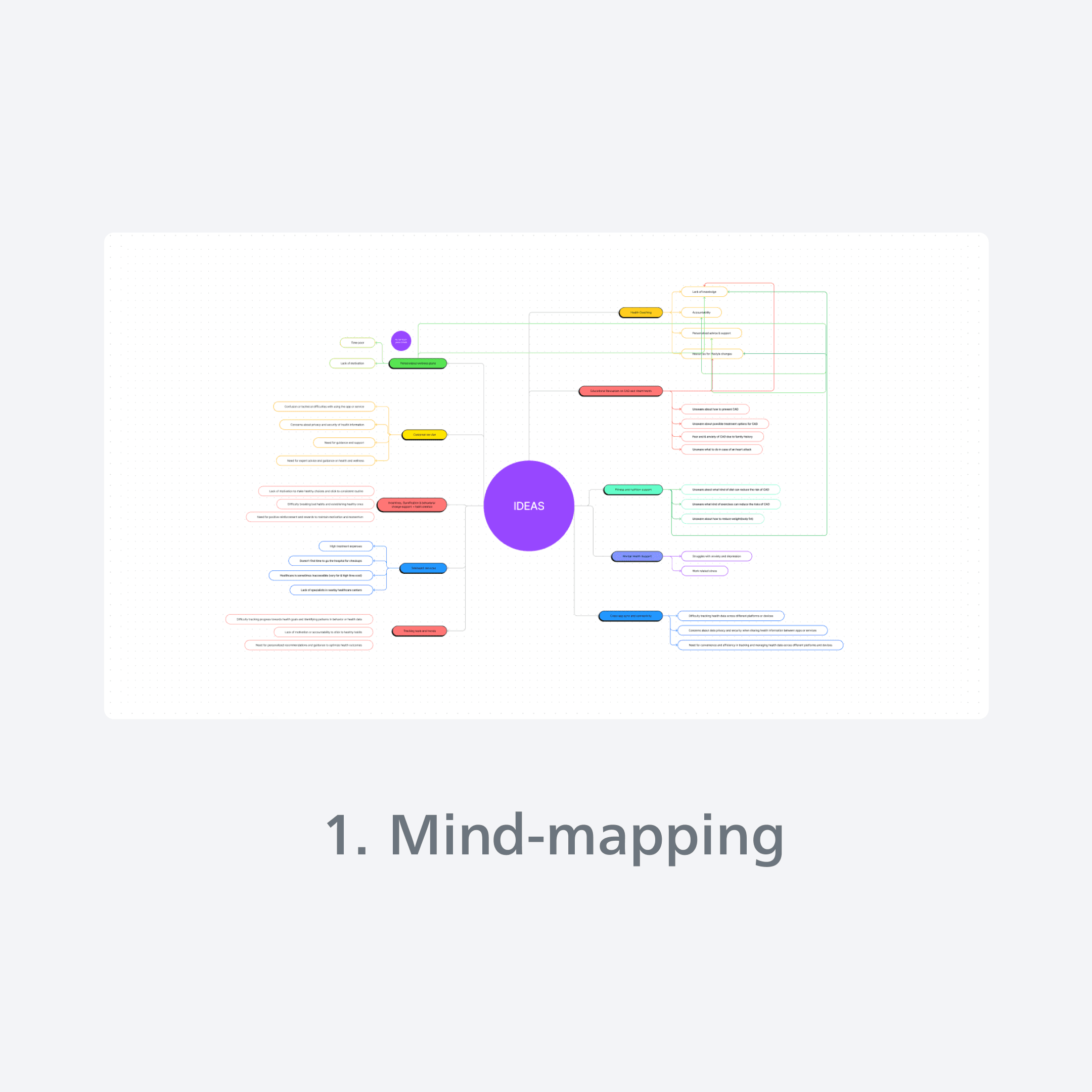
Analyzed research, defined four problems, set guiding principles, and delivered a focused design brief.
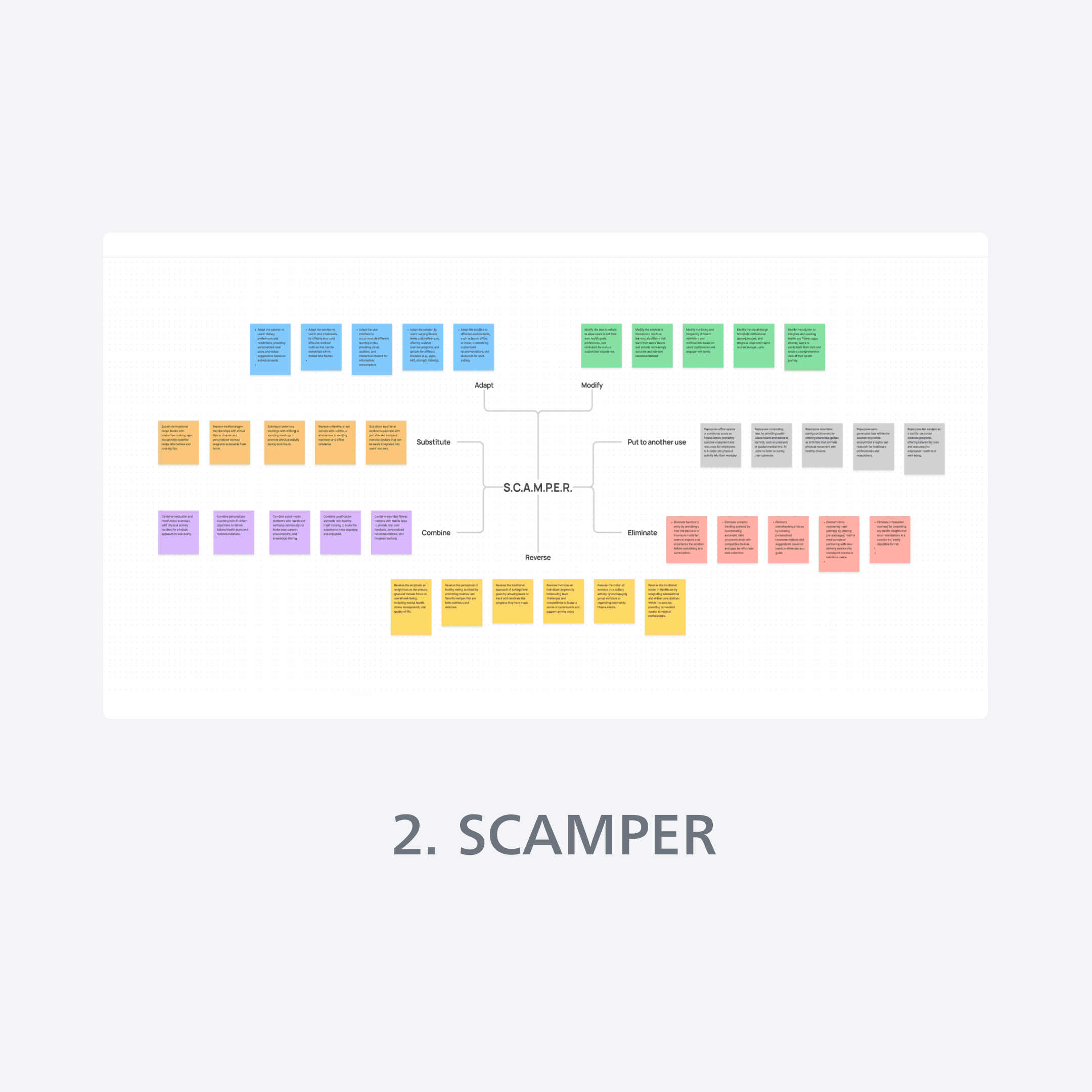
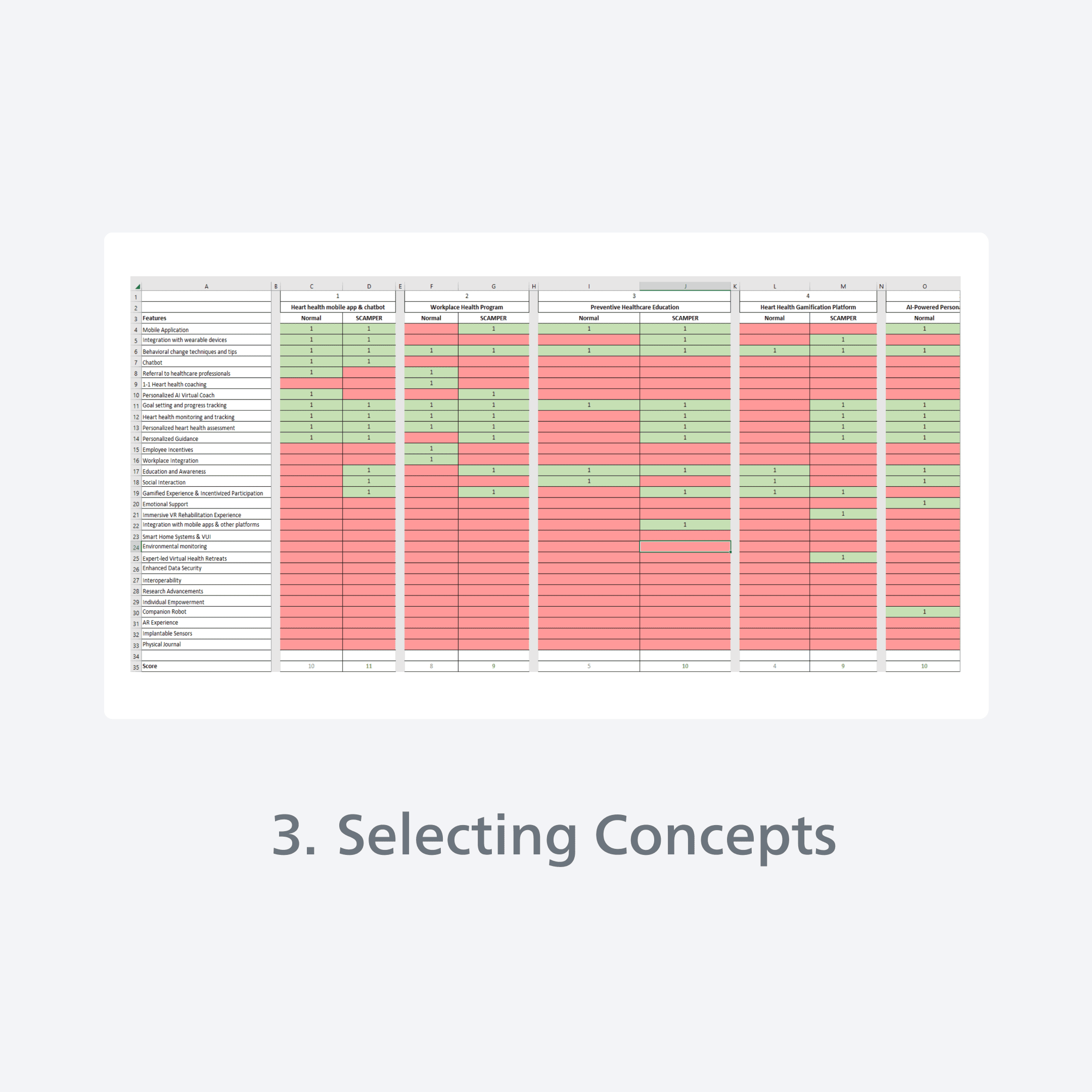
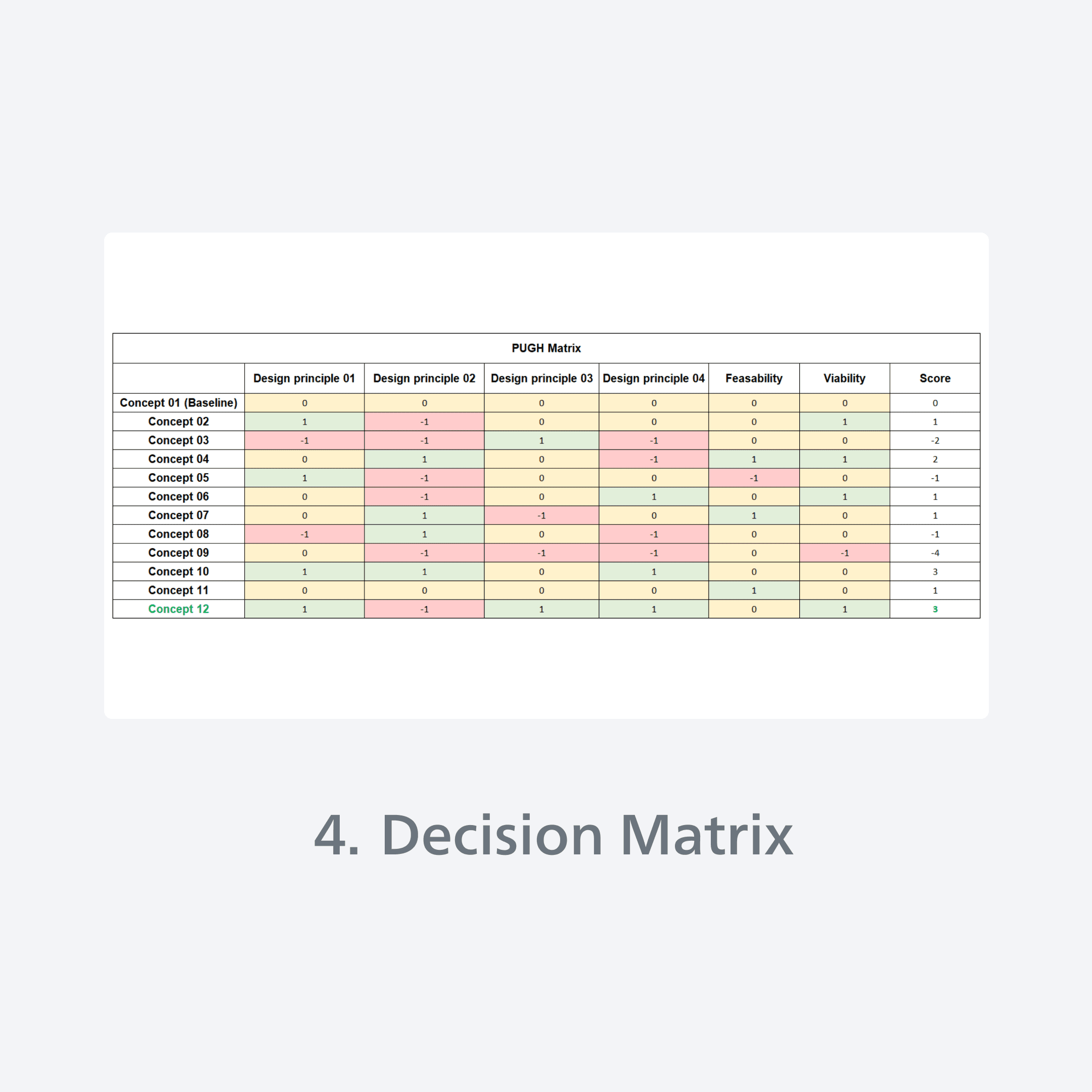
12 Concepts
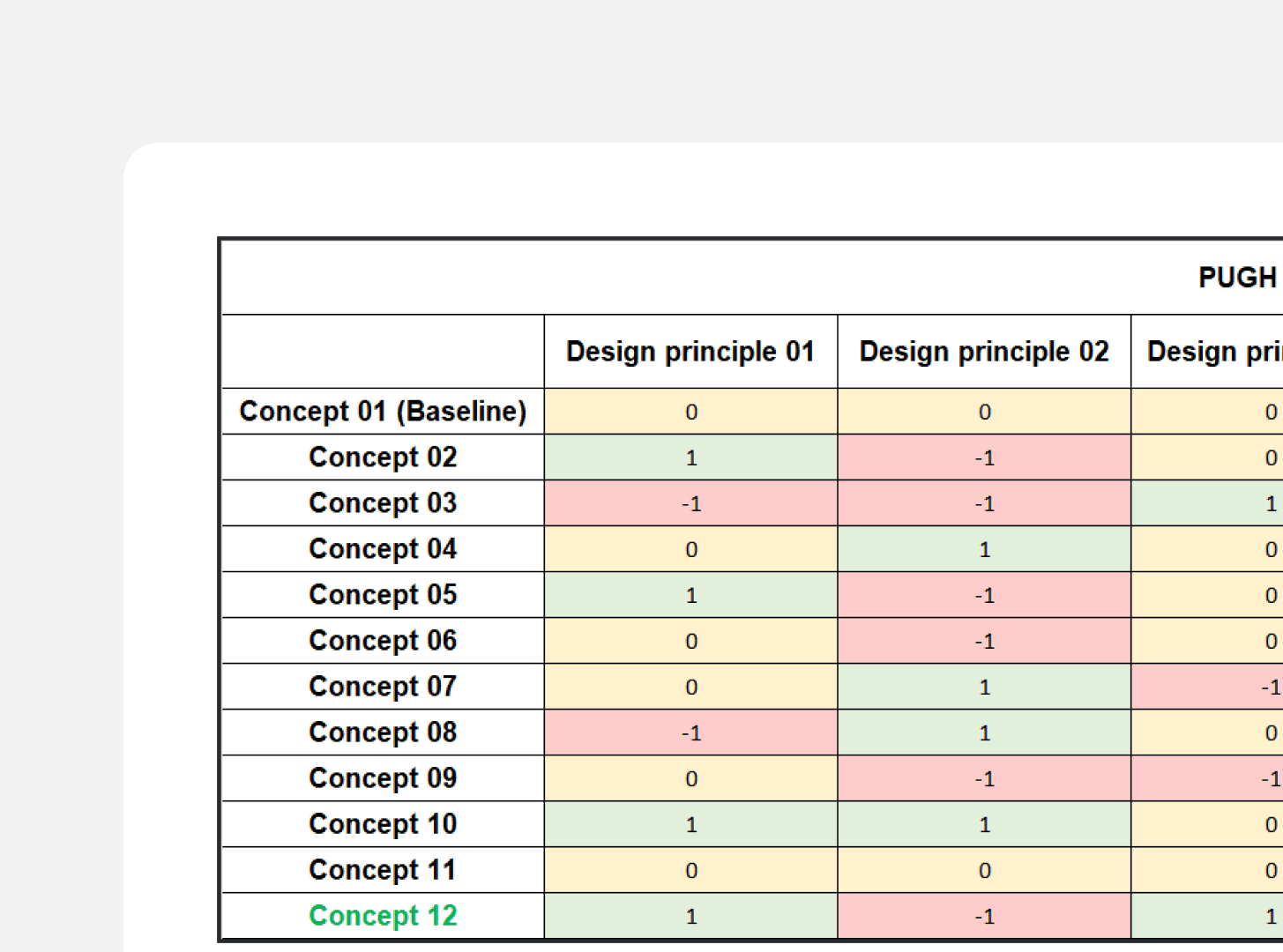
After applying SCAMPER, 24 concepts were generated & 12 were shortlisted
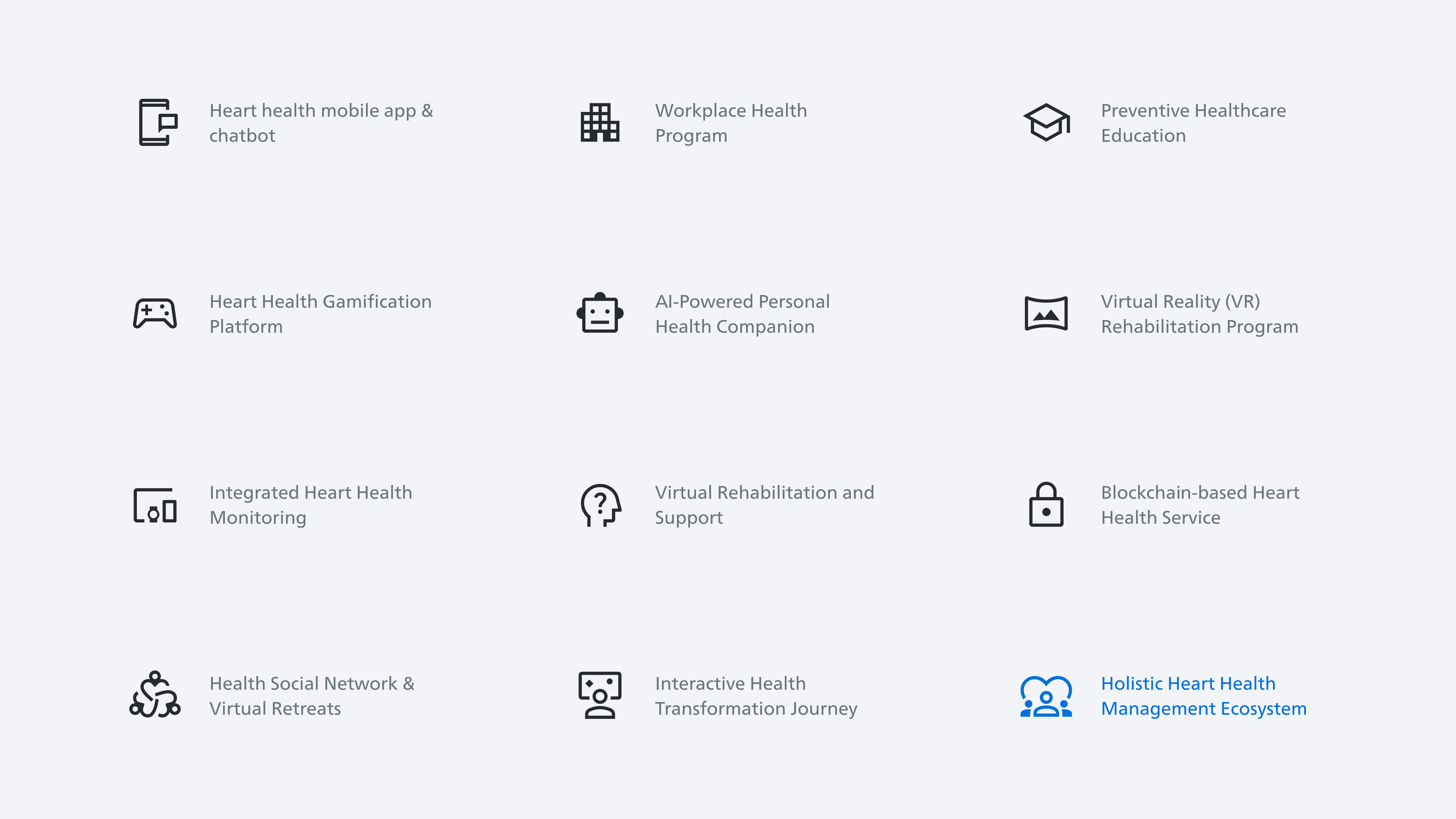
Final Solution
Holistic Heart Health Management Ecosystem
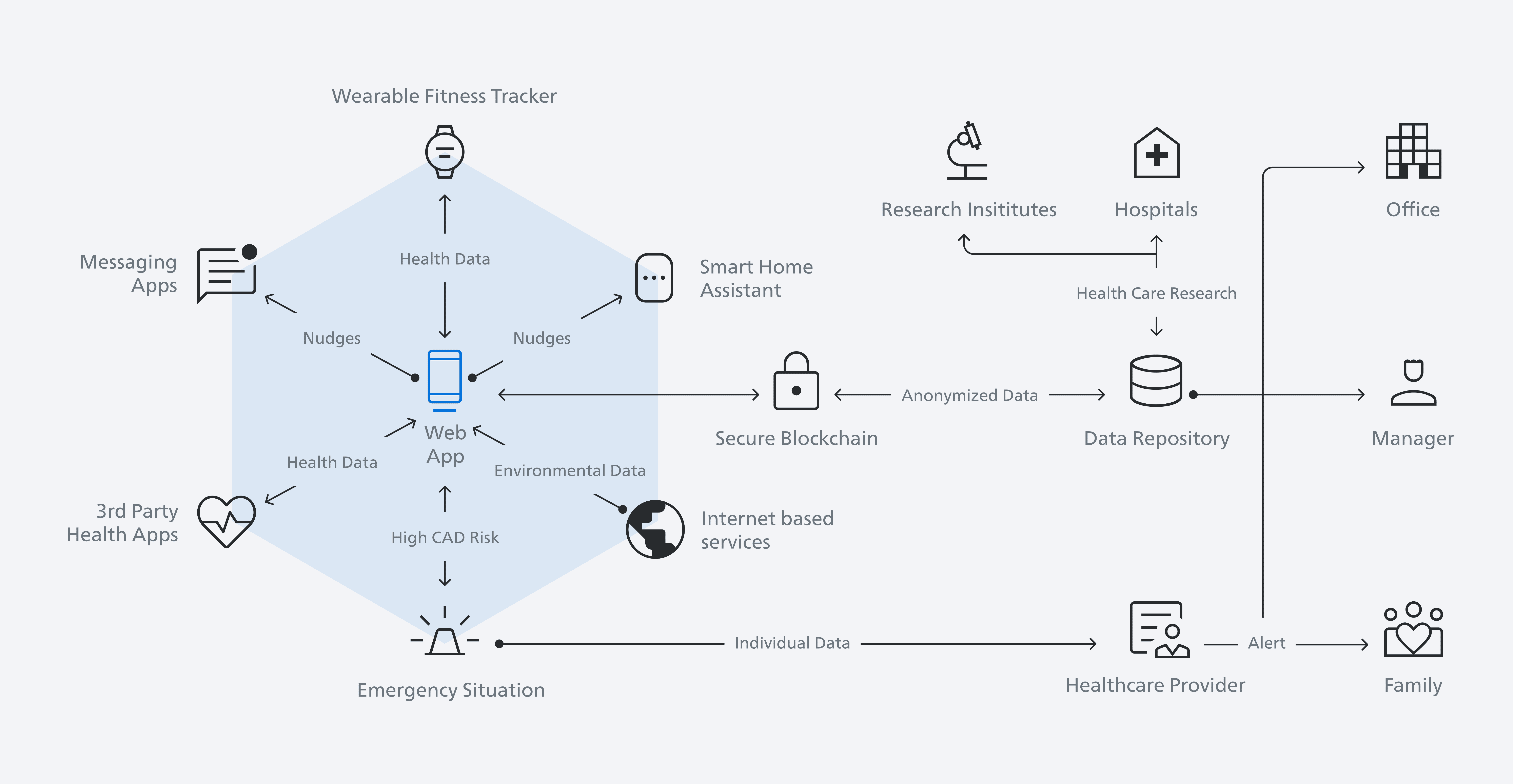
Design
Analyzed research, defined four problems, set guiding principles, and delivered a focused design brief.
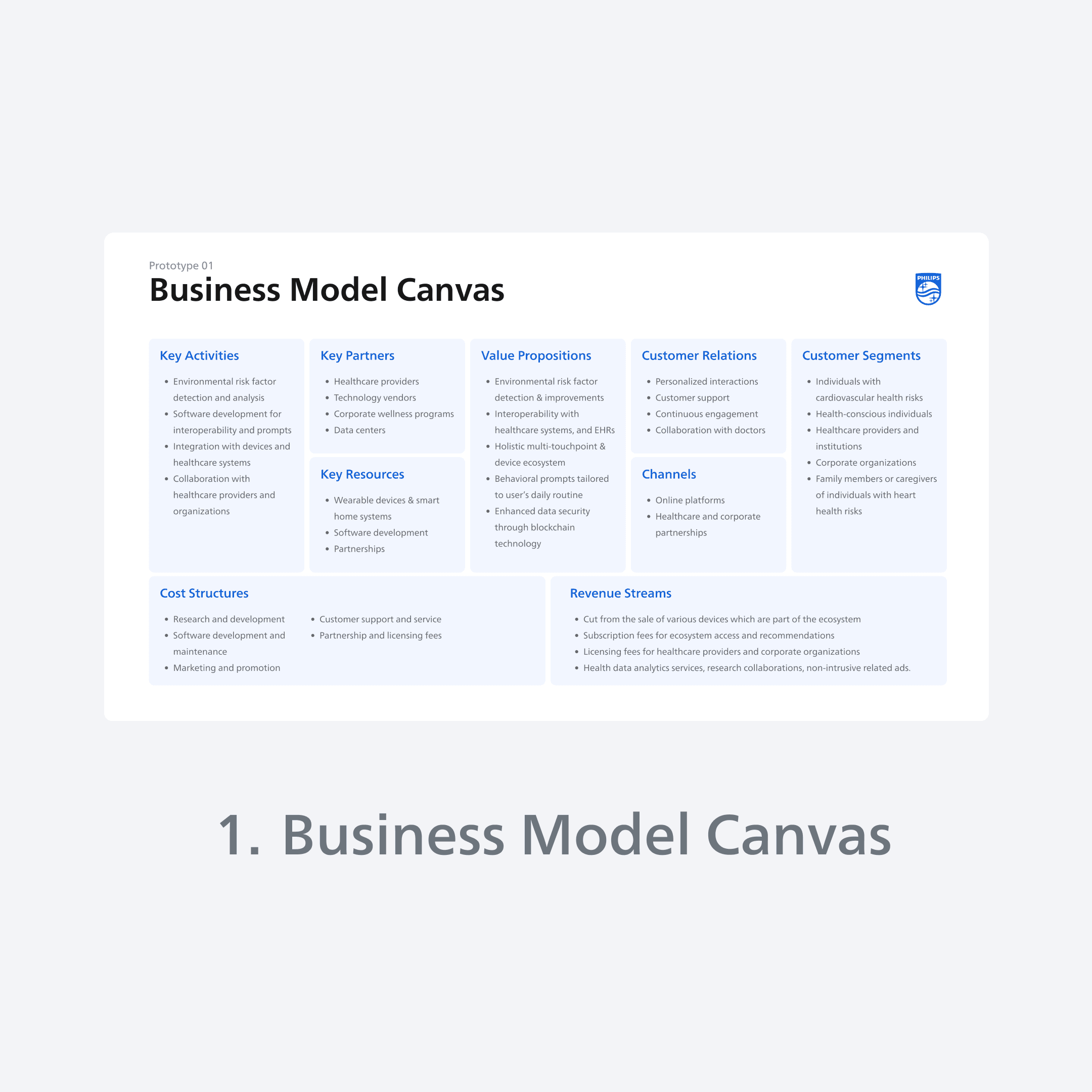
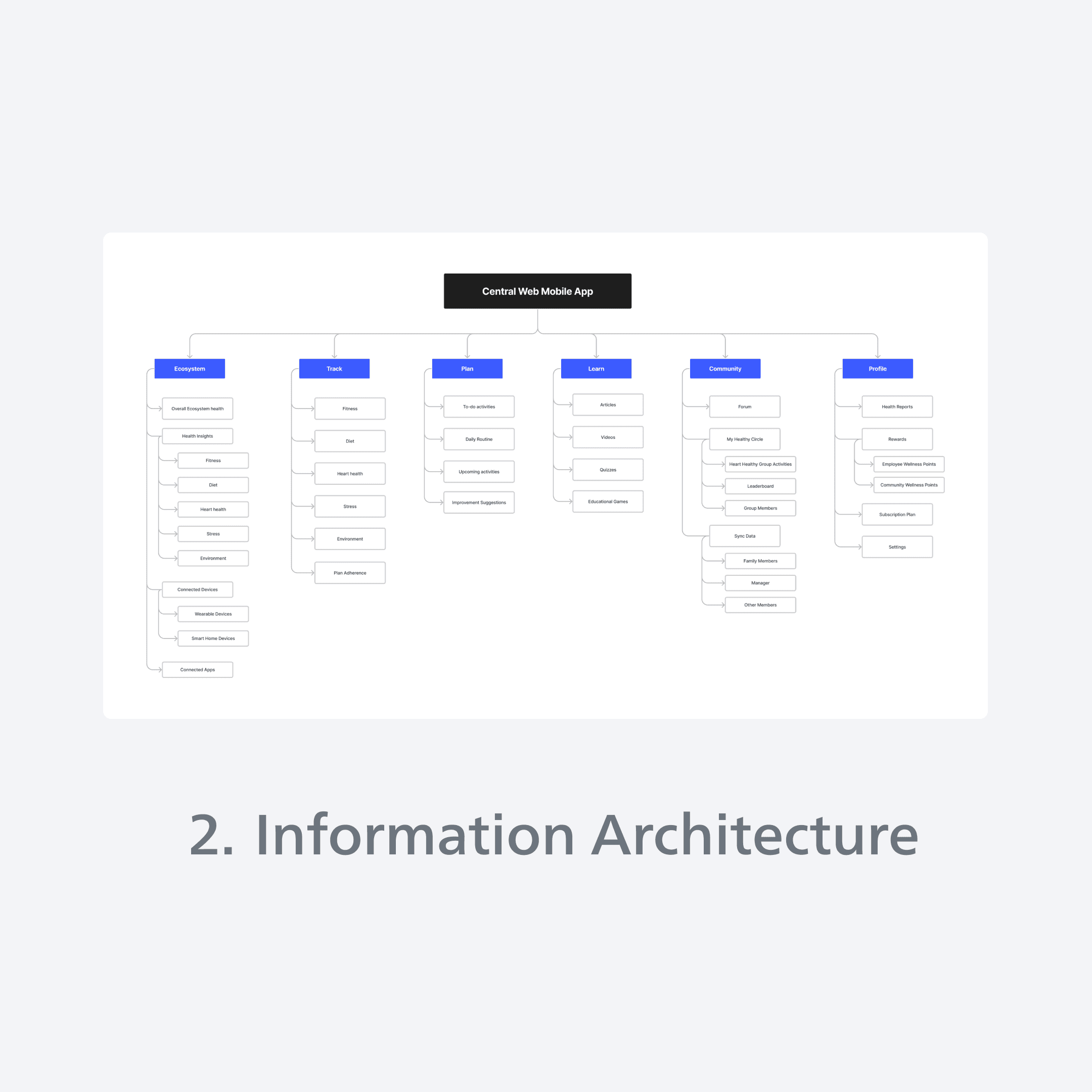
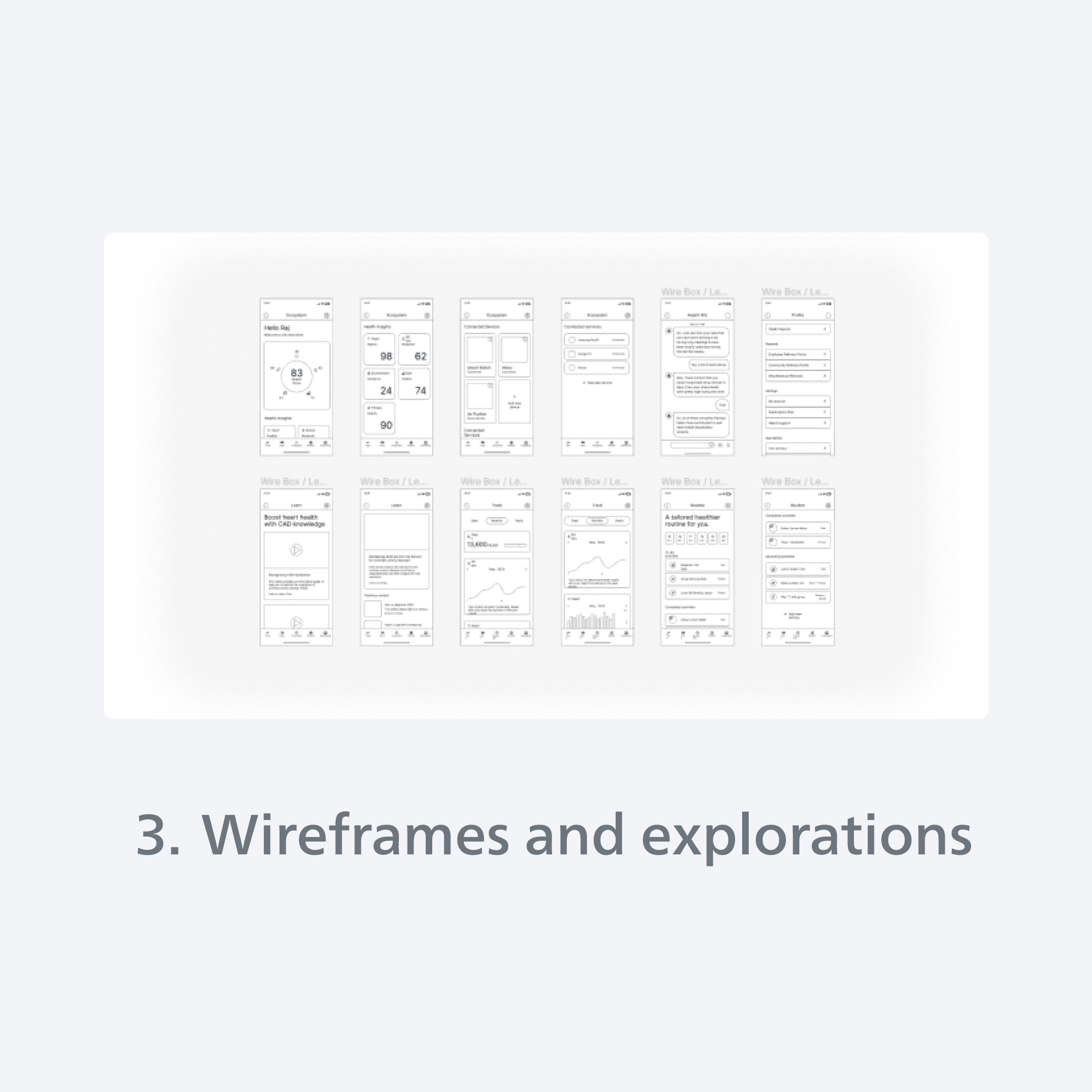
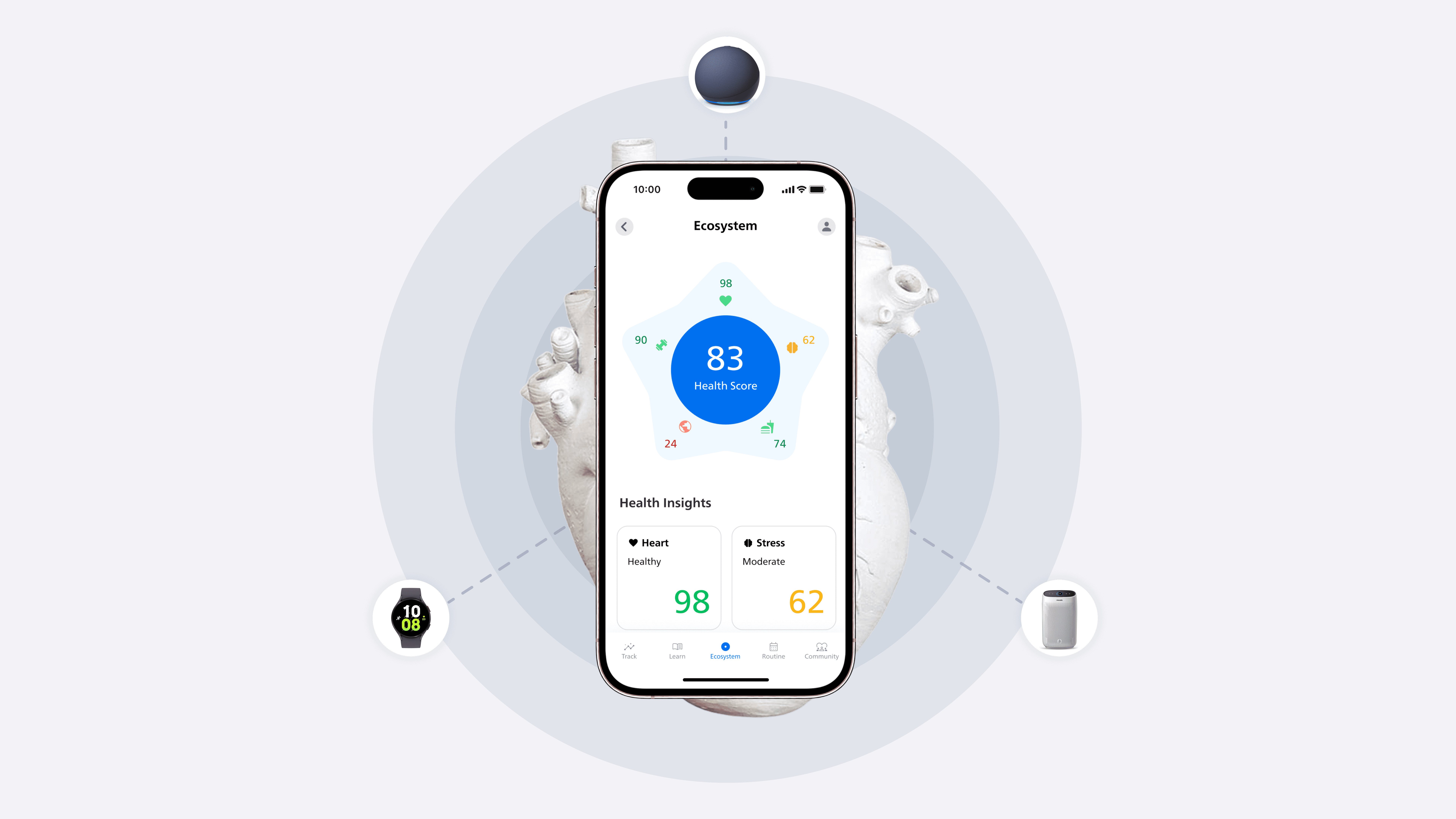
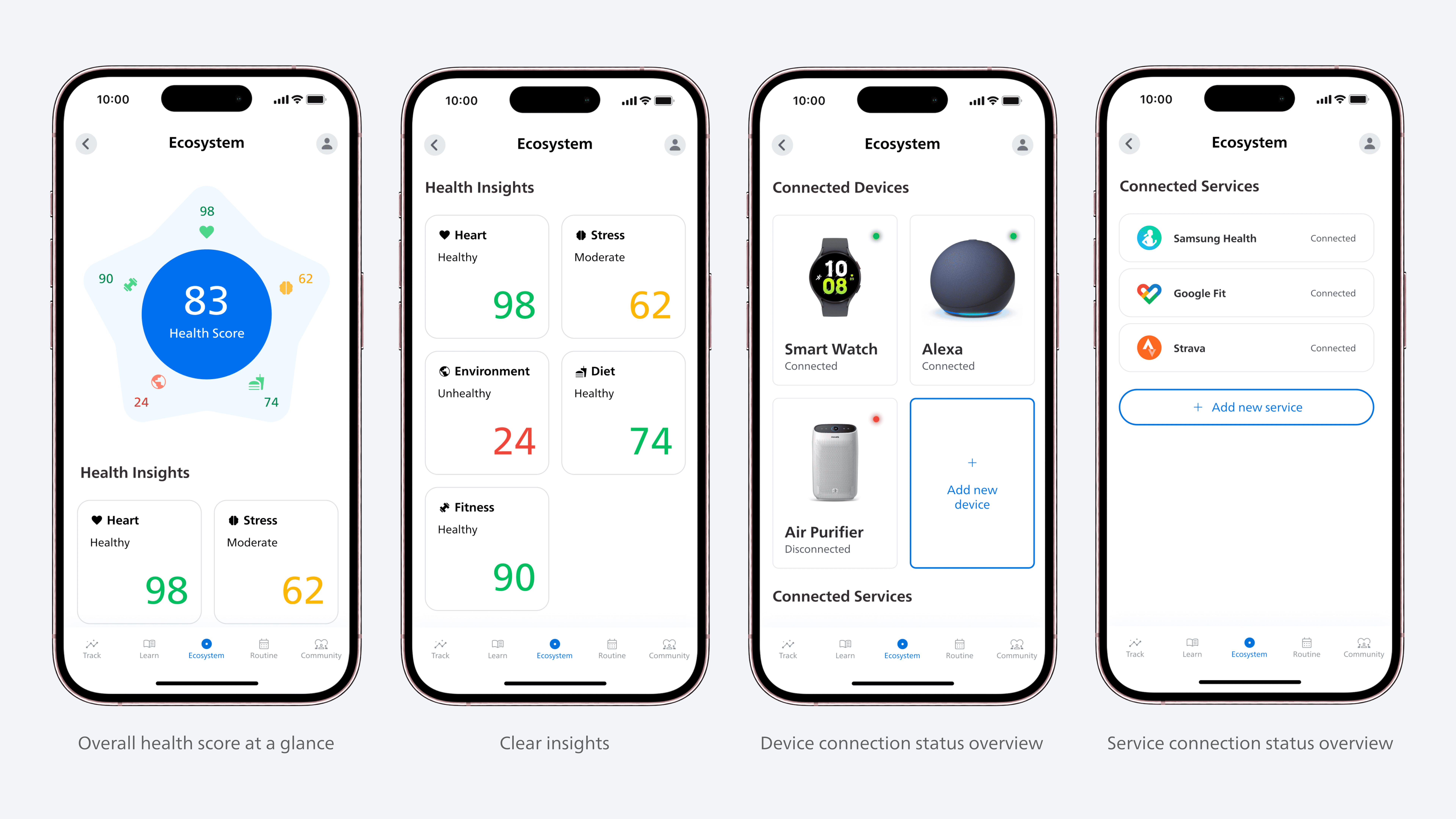
Ecosystem
This page of the central web app provides the user with the overview of their whole ecosystem which includes all connected devices, apps, & provides bit sized insights.
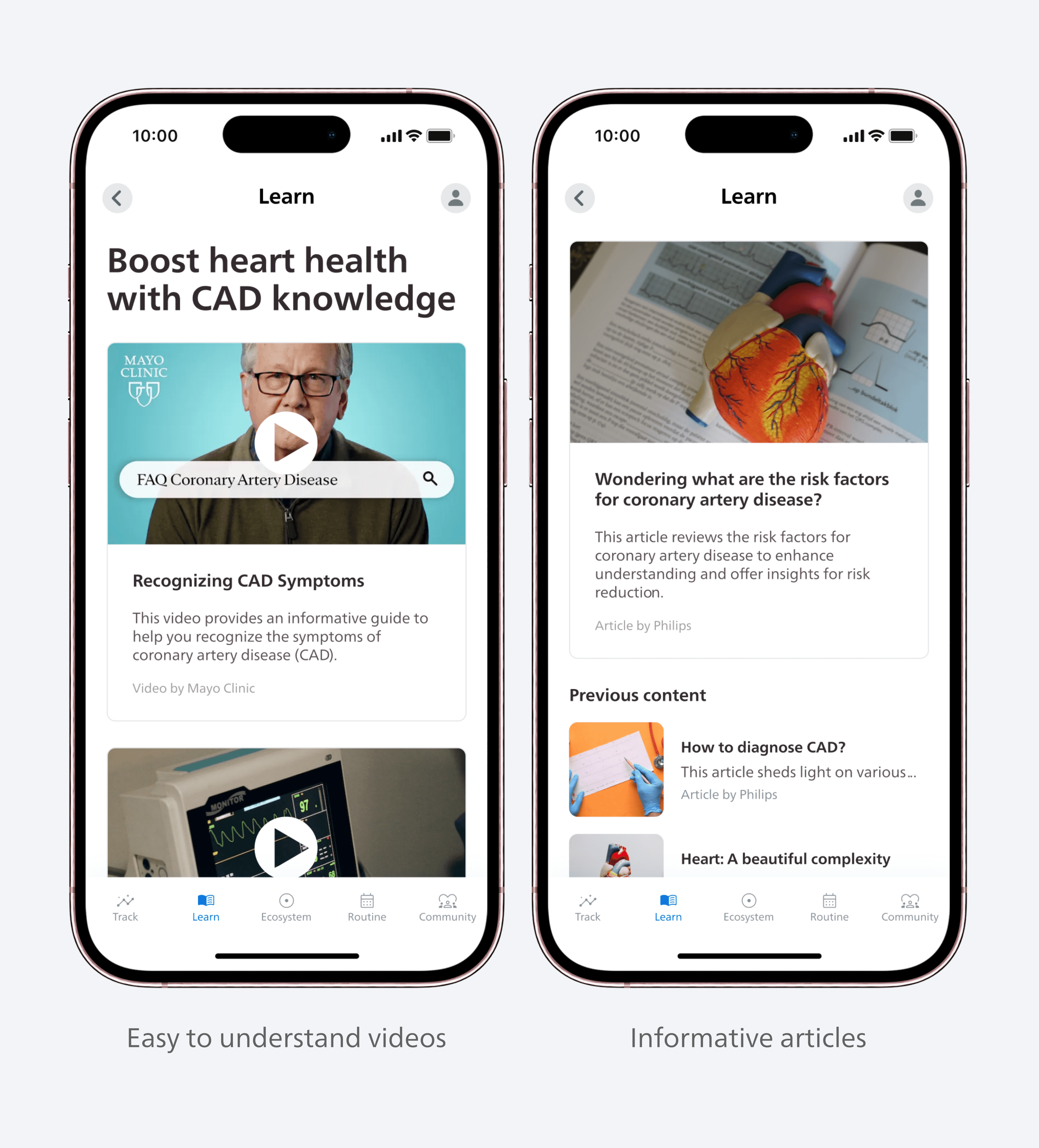
Learn
The learn sections hosts educational content about coronary artery disease in form of short videos, articles & blogs from legit resources.
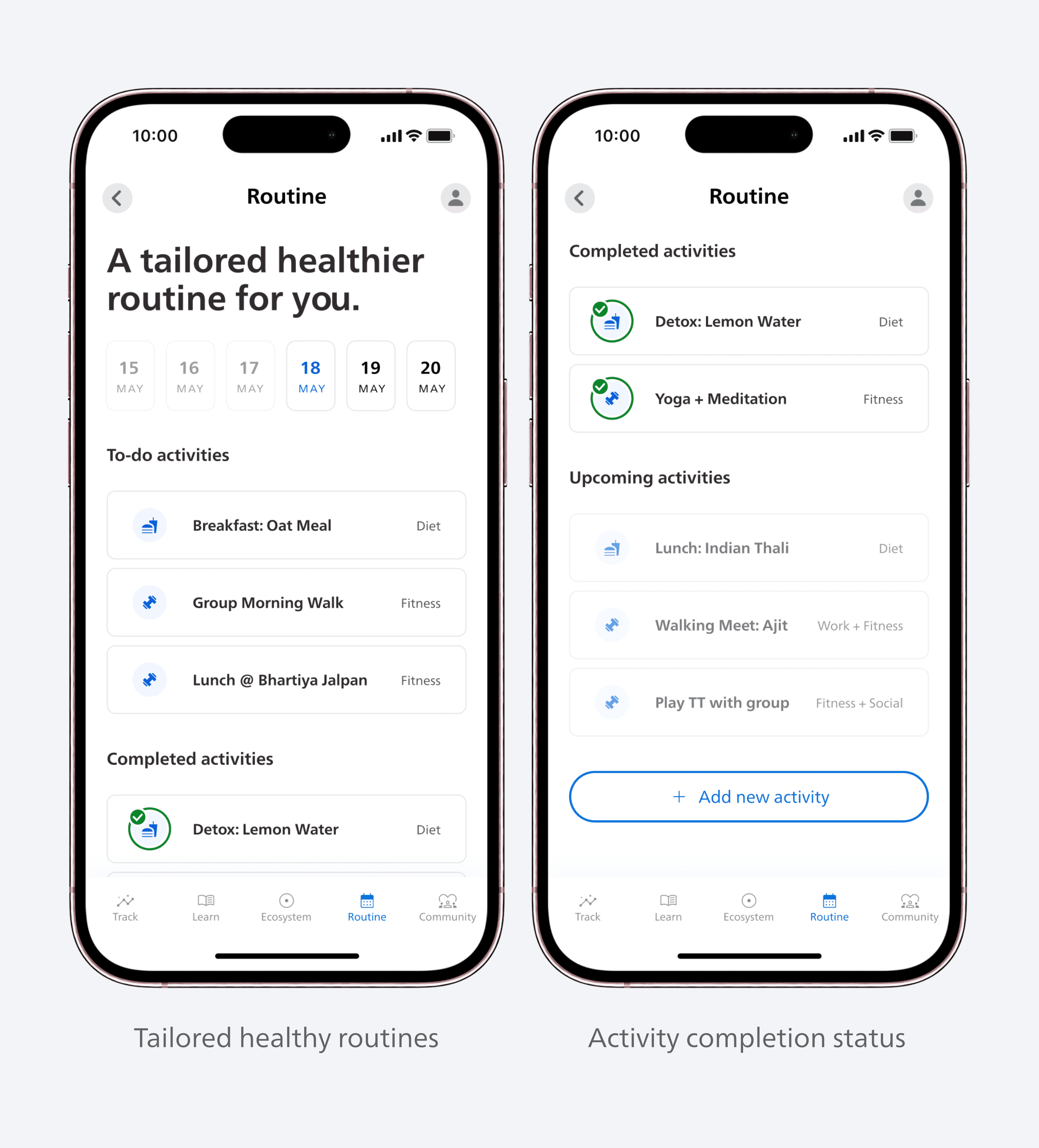
Routine
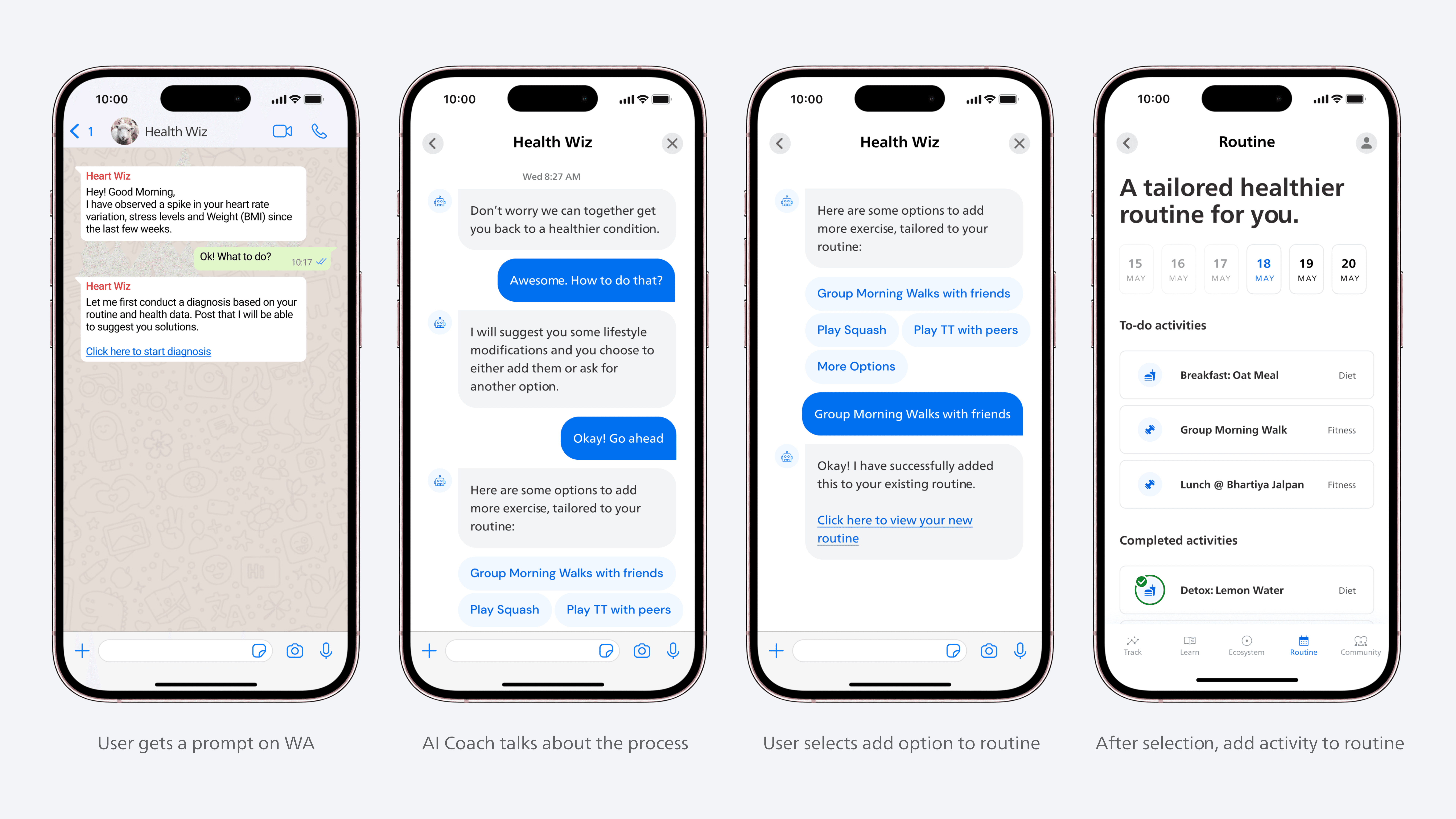
The routine section gives the user tailored lifestyle modification suggestions integrated into their existing routines for a heart-heathier lifestyle.
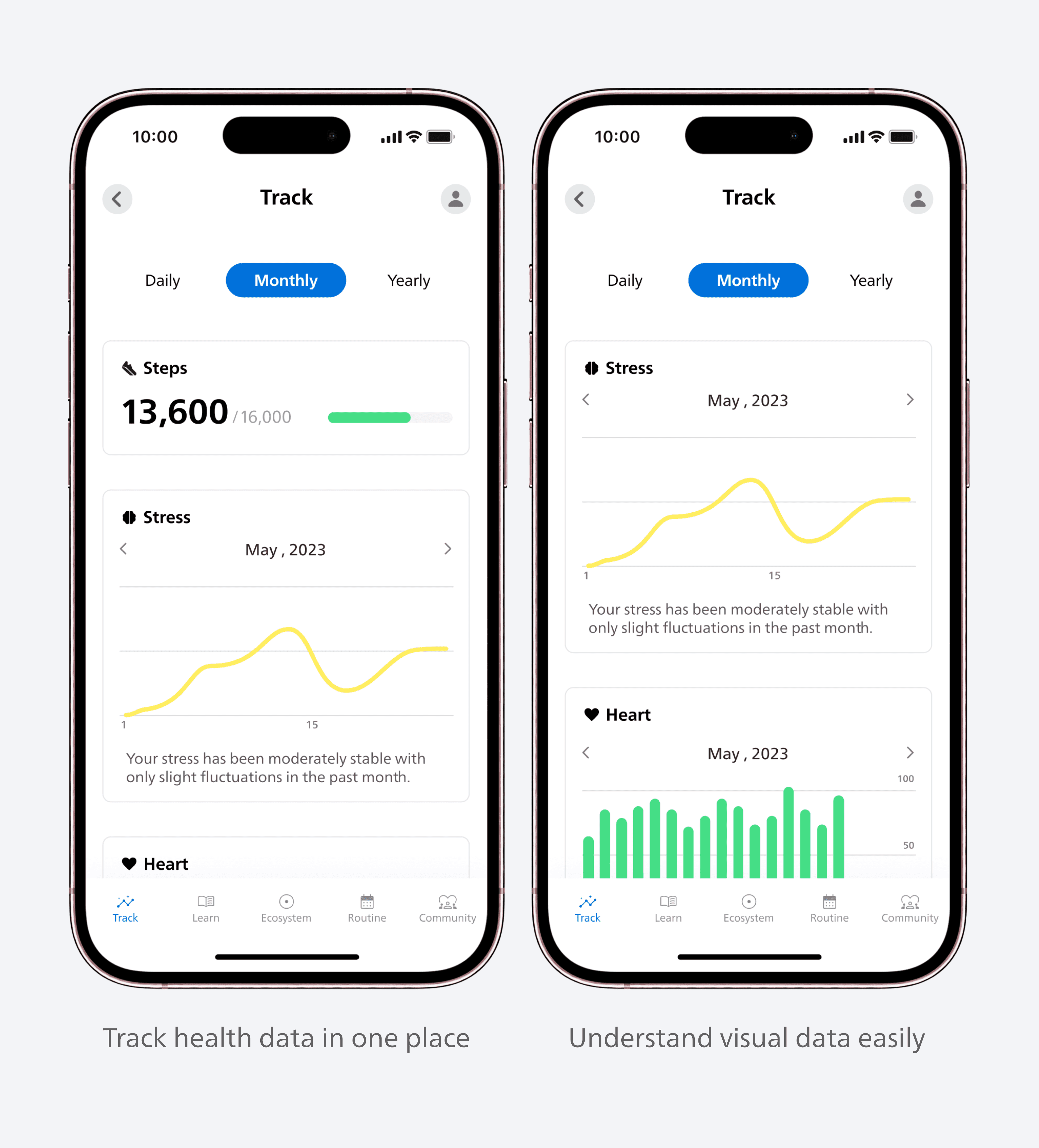
Track
Users can track their health across multiple connected apps and services in one place, with personalized insights and lifestyle tips provided for each metric to maximize benefits.
Health Wiz
Health Wiz, an AI health companion, simplifies medical jargon, explains health activities, & offers various helpful features for easy understanding & management of health-related matters.
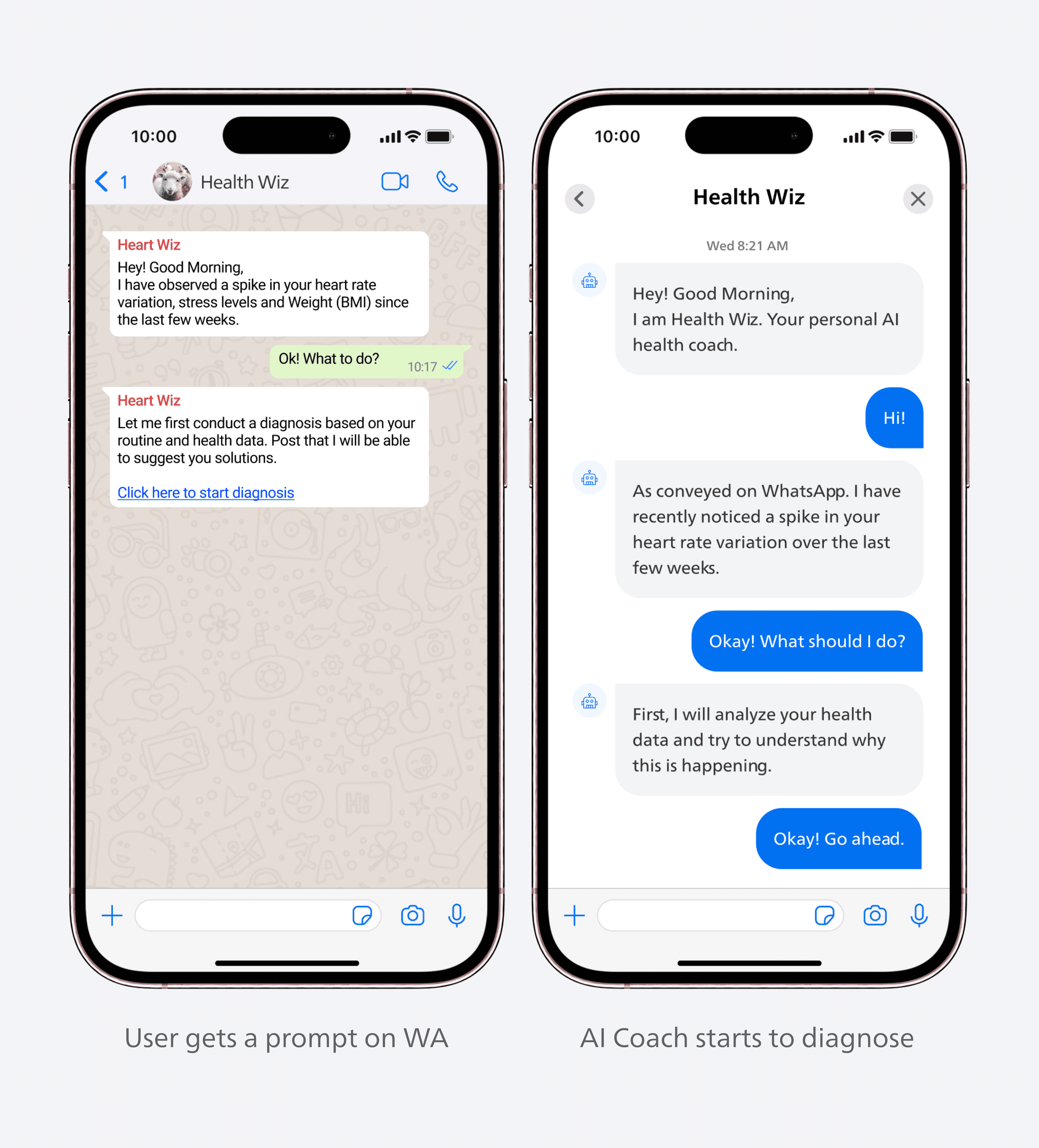
Lifestyle Change Suggestions
WhatsApp prompt from "Health Wiz" notes user's health changes. User inquires, and Health Wiz directs them to central web app for analysis and suggests lifestyle modifications based on data.
Learnings
These learnings reflect work at Philips and how the team shaped my growth.